Editor Profile

Prof. Brig. (R) Dr. Zahid Akhtar Rao
Professor
Present
Fazaia Ruth Pfau Medical College
Karachi
Pakistan
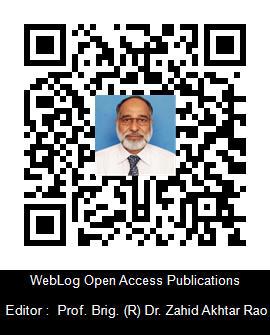
Prof. (Brigadier Retired) Dr. Zahid Akhtar Rao stands among the most distinguished figures in the field of Anaesthesiology, Critical Care, and Pain Medicine in Pakistan, with a career spanning over four decades of exemplary service, leadership, and academic excellence.
A graduate of Liaquat Medical College, Jamshoro, Dr. Rao pursued advanced specialization in Anaesthesiology, earning MCPS and FCPS qualifications from the College of Physicians and Surgeons Pakistan, followed by a Master’s degree in Pain Medicine and certification in Health Professions Education. His professional journey reflects a rare combination of clinical mastery, academic scholarship, and visionary leadership.
Over the years, he has held pivotal appointments in leading institutions, including PNS Shifa Hospital, SMBB Trauma Centre Civil Hospital Karachi, and Bahria Town International Hospital. Currently, he serves as Professor of Anaesthesiology, Chairman of Anaesthesiology, Critical Care & Pain Management, and Director of Postgraduate Medical Education at Fazaia Ruth Pfau Medical College, Karachi, where he continues to shape the future of medical education and clinical practice.
Dr. Rao’s contributions to the discipline extend far beyond institutional boundaries. He has been instrumental in establishing specialized services, advancing critical care practices, and promoting patient safety initiatives across Pakistan. An accomplished academic, he has authored numerous peer-reviewed publications and has presented his work at prestigious national and international forums.
A dedicated mentor and educator, he has served as Examiner, Supervisor, and Inspector for the College of Physicians and Surgeons Pakistan, and has contributed extensively to academic governance through boards of studies and academic councils. His commitment to professional development is further reflected in the countless workshops, training programs, and conferences he has organized and led.
Dr. Rao has played a transformative role in professional leadership through the Pakistan Society of Anaesthesiologists, where he has served with distinction as President, General Secretary, and in multiple executive capacities. In recognition of his lifelong dedication, outstanding contributions, and enduring impact on the specialty, he has been honored with the Lifetime Achievement Award by the Pakistan Society of Anaesthesiologists—a testament to his legacy as a pioneer, mentor, and leader in the field.
Beyond academia and clinical practice, Dr. Rao is a committed philanthropist and Founder Chairman of the Zahid Akhtar Rao Foundation, a non-profit organization devoted to healthcare and educational support for underserved communities.
Prof. Dr. Zahid Akhtar Rao’s career is a reflection of unwavering dedication, visionary leadership, and a profound commitment to excellence. His contributions have left an indelible mark on the landscape of anesthesiology and critical care in Pakistan, inspiring generations of clinicians and educators.
- Anesthesiology & Critical Care
- Pain Medicine
- Trauma & Emergency Medicine
- Medical Education & Training
- Public Health & Philanthropy
- Comparison of Intrathecal Bupivacaine Versus Bupivacaine Plus Dexmedetomidine for Postoperative Pain Relief in Terms of Quality and Duration. Pak Armed Forces Med J 2025; 75(6):1230
- Comparison of low-dose ketamine infusion versus lignocaine infusion for post-operative pain in patients undergoing laparoscopic cholecystectomy under general anesthesia. Anaesthesia, Pain and Intensive Care. Vol 29(8); Nov 2025; DOI: 10.35975/apic.v29i8.2891; ISSN: 1607-8322, e-ISSN: 2220-5799
- Effect of Low-Dose Ketamine Infusion on Quality and Duration of Postoperative Pain in Patients undergoing Laparoscopic Cholecystectomy under General Anesthesia. National Journal of Health Sciences, 2025, 10, 160-166. doi.org/10.21089/njhs.103.0160
- Effect of Local Wound Infiltration with Ketamine versus Dexmedetomidine on Post-operative Pain Relief in Terms of Quality and Duration after Cesarean Section. Pak Armed Forces Med J 2025; 75(Suppl-2): S370-S374. DOI: https://doi.org/10.51253/pafmj.v75iSUPPL-2.11742
- Comparison of analgesic properties of propolis with sodium hypochlorite as an endodontic irrigant: a randomized controlled trial. Anaesthesia, Pain & Intensive Care.2025;29(1):139-147
- Enhanced Recovery after caesarean section- an improved pathway than conventional care for reducing hospital stay. J Ayub Med Coll Abbottabad 2024;36(1):50–55.
- Prevalence of post–COVID syndrome in a cohort of faculty of a medical institute and their family members. Anaesth. Pain intensive care 2022;26(2):154-160
- Clinical profile of adult tetanus patients and the impact of early tracheostomy on the outcome; a retrospective observational study. Anaesth. Pain intensive care 2021;25 (5):625-632.
- A randomized comparison of ultrasound guided versus direct palpation method of radial artery cannulation techniques in adult patients undergoing open heart surgery. Anaesth, Pain & Intensive Care; Vol 20, No.(1) Jan-Mar 2016; 38-42.
- Geriatric Health Care: A Crucial Need of Time. Pak Armed Forces Med J 2016; 66 (Suppl-1): S56-60.
- Developing local guidelines for management of sepsis in adults: Sepsis Guidelines for Pakistan. Anaes, Pain & Intensive Care; Vol 19(2) April-Jun 2015; 196-208.
- Coin Impaction at Upper end of Esophagus; Wait or Intervene. Pakistan Journal of Otolaryngology 2013; 29: 77-79.
- Evaluation of the analgesic and adverse effects of Tramadol in combination with low dose Bupivacaine for painless epidural delivery. Pak Armed Forces Med J 2010; 60(3): 415-9.
- Walking Epidural with Low Dose Bupivacaine plus Tramadol on Normal Labour in Primipara JCPSP 2010, Vol. 20 (5): 295-298.
- Early versus delayed oral feeding after cesareans section under spinal anaesthesia .Pak. J. Obstet and Gyneacol 2009 Vol 17(1):10-13.
- Frequency of hepatitis b & c in gynaecological patients. Pak Armed Forces Med J 2008; 58(4): 401-404.
- An experience of percutaneous tracheotomy in twenty obesity patients with short neck in a tertiary care hospital in Pakistan. Pak Armed Forces Med J 2008; 58(3): 286-291.
- Oxygenation of a neonate after oesophageal intubation; A case report. Anaesthesia, Pain & Intensive Care. 2006, Vol. 10 (2): 72-74.
- Anaesthetic Management of Earthquake Victims. Anaesthesia, Pain & Intensive Care. 2006, Vol. 10 (1): 18-21.
- Comparison of hemodynamic effects of unilateral versus bilateral spinal anesthesia, Pak Armed Forces Med J Mar 2006; 56(1):45-9.
- Nalbuphine Prevents Haemodynamic Response to Endotracheal Intubation. JCPSP 2005, Vol. 15 (11): 668-670.