Archived Articles

Research Article | Open Access
Published on: 27 Jul 2026
Article ID: wjsmp.2026.g2701
Effectiveness of Plyometric Training Versus Pilates Training on Explosive Muscle Strength and Running Performance in Recreational Marathon Runners
Background: Endurance performance in marathon runners depends not only on aerobic conditioning but also on neuromuscular efficiency, muscular power, and postural control. Supplemental exercise programs such as plyometric and Pilates training may improve running economy and athletic performance.
Objective: To compare the effects of plyometric training and Pilates training on explosive muscle strength and running performance in recreational…

 DOI: 10.5281/zenodo.21705520 »
Research Article | Open Access
Published on: 06 Apr 2026
Article ID: wjsmp.2026.d0603
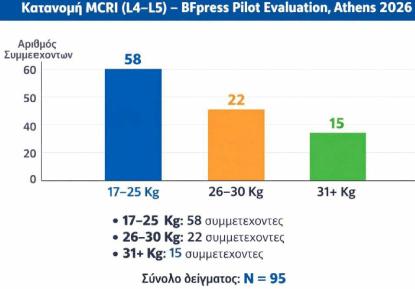
BFpress Method: Pilot Evaluation of Muscle Compression Resistance Index (MCRI) at the 33rd Athens Physiotherapy Conference
This pilot study aimed to evaluate muscle resistance using a novel device (BFpress) and a newly proposed index, the Muscle Compression Resistance Index (MCRI). Data were collected from 95 participants during the 33rd Scientific Physiotherapy Conference in Athens (2026). Measurements were performed bilaterally at the L4–L5 paraspinal level.
Participants were categorized based on MCRI values: <25 kg, 25–35 kg, and >35 kg. The majority (61%) demonstrated increased muscle resistance…

Review Article | Open Access
Published on: 27 Mar 2026
Article ID: wjsmp.2026.c2703
Neurophysiological Respiratory Facilitation (NPF) and Respiratory Muscle Dynamics: Neural Mechanisms for Enhancing Pulmonary Rehabilitation
The interaction between the central nervous system and respiratory musculature is pivotal in managing critically ill patients. This review examines the functional anatomy of primary and accessory respiratory muscles and evaluates the role of Neurophysiological Respiratory Facilitation (NPF). We discuss how external tactile and proprioceptive stimuli trigger reflex respiratory movement sequences, potentially through the activation of "Central Pattern Generators" (CPGs) and medullary…

Research Article | Open Access
Published on: 07 Mar 2026
Article ID: wjsmp.2026.c0701
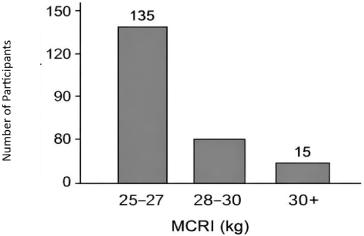
Preliminary Reference Values for Lumbar Muscle Compression Resistance (MCRI) in Healthy Adults - Observational Study Using BFpress
Quantitative assessment of muscle mechanical properties is critical in physiotherapy. The BFpress device allows objective measurement of lumbar muscle compression resistance, but normative data are lacking. This observational study measured 150 healthy physiotherapists (≈2/3 male, 1/3 female; Age 20-55) in prone position at L4-L5. Most participants (≈135) had values 25-27 kg, while ≈15 exceeded 30 kg. All were asymptomatic. Maximum recorded value: 38 kg. These preliminary reference values…

Case Report | Open Access
Published on: 05 Mar 2026
Article ID: wjsmp.2026.c0502
Preliminary Clinical Application of the Muscle Compression Resistance Index (MCRI) Using the BFpress Device: A Physiotherapy Case Report
Background: Objective assessment of muscle resistance and muscle spasm in physiotherapy practice remains limited, as clinical evaluation is commonly based on subjective palpation [4, 8]. Compression-based measurement approaches may provide more objective clinical information.
Purpose: To present a preliminary clinical application of the Muscle Compression Resistance Index (MCRI) using the BFpress device in a patient with lumbar muscle spasm…

Research Article | Open Access
Published on: 28 Jan 2026
Article ID: wjsmp.2026.a2805
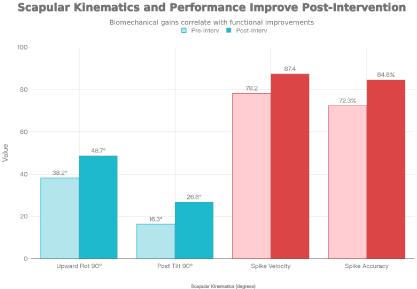
Effect of TheraBand-Based Throwing Exercises on Glenohumeral Rotational Kinematics, Scapular Dyskinesis, and Spiking Performance in Volleyball Players with Shoulder Internal Rotation Deficit: A Randomized Controlled Trial
Background: Glenohumeral Internal Rotation Deficit (GIRD) in overhead athletes represents a significant concern in volleyball, yet most research focuses solely on range of motion improvements without assessing biomechanical adaptations or sport-specific performance outcomes.
Objective: This study evaluated the efficacy of a 12-week TheraBand-based throwing exercise program on glenohumeral rotational kinematics, scapular dyskinesis, and spiking…

Research Article | Open Access
Published on: 17 Jan 2026
Article ID: wjsmp.2026.a1703
Eating Disorders among University Students: Prevalence and Socioeconomic, Behavioural, and Health Correlates
Background: Eating disorders (EDs) are complex mental health conditions that can significantly impair physical and psychosocial functioning, and University students are considered a high-risk group. Limited studies have explored the prevalence and associated factors of EDs among university students in Malaysia.
Objective: To determine the prevalence of eating disorders and identify associated factors among university…

Research Article | Open Access
Published on: 15 Jan 2026
Article ID: wjsmp.2026.a1502
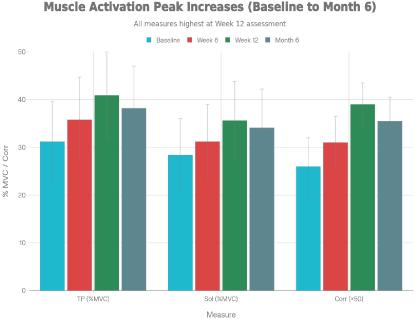
Mechanistic Effects of Gait Retraining Combined with Neuromuscular Strengthening on Lower Limb Biomechanics and Tissue Stress in Participants with Medial Tibial Stress Syndrome: A Three-Dimensional Motion Capture and Electromyographic Analysis
Background: While gait retraining and neuromuscular strengthening demonstrate individual clinical efficacy in medial tibial stress syndrome (MTSS) management, the integrated biomechanical mechanisms through which combined intervention modifies lower limb loading parameters and tissue stress remains inadequately characterized in contemporary literature. High-resolution biomechanical quantification integrating three-dimensional motion capture, ground reaction force analysis,…

Case Report | Open Access
Published on: 21 Nov 2025
Article ID: wjsmp.2025.k2101
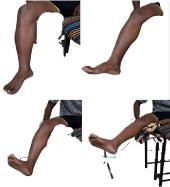
Dynamic Angle-Based Neuromuscular Activation (D.A.N.A.) Protocol: A Novel Multi-Angle Rehabilitation Approach for Grade III Chondromalacia Patella – A Case Report
Background: Chondromalacia patella is a common source of anterior knee pain in athletes, often leading to impaired quadriceps control and delayed return to sport. Conventional rehabilitation typically focuses on single-angle or generalized strengthening, which may not adequately activate muscles throughout the joint’s functional range.
Purpose: This case report introduces the Dynamic Angle-Based Neuromuscular Activation (D.A.N.A.) Protocol, a…

Research Article | Open Access
Published on: 05 Nov 2025
Article ID: wjsmp.2025.k0501
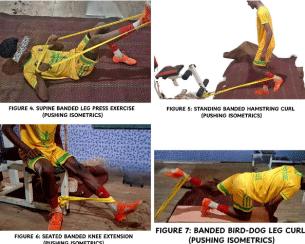
Influence of Pushing Versus Holding Isometric Exercises at Different Joint Angles on Hamstring-Quadriceps Strength Ratio and Functional Performance: A Time-Under-Tension Approach to Injury Risk Reduction
Background: The hamstring-to-quadriceps (H:Q) strength ratio is a critical determinant of knee stability, functional performance, and injury prevention. Optimizing this ratio is essential for reducing injury risk, particularly among athletes and physically active individuals. Isometric training, characterized by pushing and holding exercises, is commonly used to enhance strength. However, the comparative effects of these two methods at different joint angles, particularly…