Archived Articles
Case Report | Open Access
Published on: 30 Sep 2026
Article ID: wjan.2026.i3001
Postextubation Upper-Airway Obstruction Leading to Negative-Pressure Pulmonary Edema and Hypoxic Cardiac Arrest Despite Apparent Recovery After Sugammadex Reversal: A Case Report
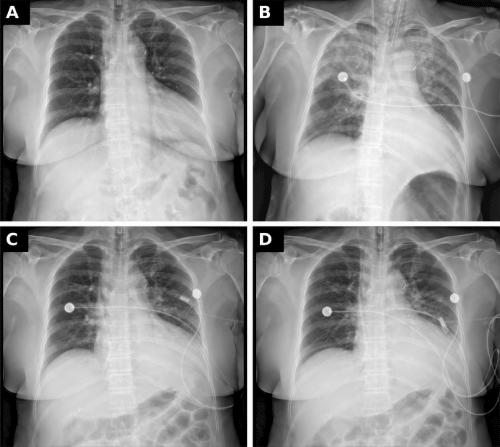
Postextubation upper-airway obstruction may cause negative-pressure pulmonary edema (NPPE) and, rarely, life-threatening cardiovascular collapse. Apparent clinical recovery after neuromuscular blockade reversal does not necessarily ensure adequate upper-airway function.
A 67-year-old woman underwent laparoscopic cholecystectomy under general anesthesia with induction of rocuronium. At the end of surgery, the train-of-four (TOF) count was 2, and sugammadex over 2 mg/kg was…

 DOI: 10.5281/zenodo.23005426 »
Case Report | Open Access
Published on: 30 Sep 2026
Article ID: wjan.2026.i3002
Airway Management Using Spoon Forceps for Stabilization of a Large Vocal Cord Mass During Endotracheal Intubation: A Case Report
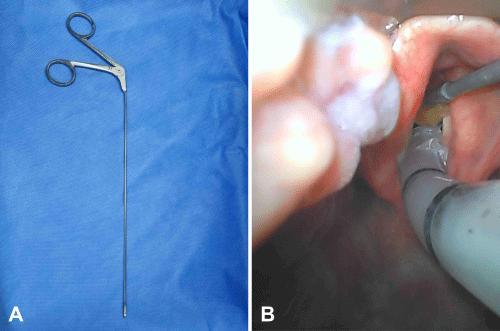
Tracheal intubation in patients with large, mobile, or friable glottic lesions may be complicated by lesion contact, displacement, bleeding, dynamic airway obstruction, or difficulty advancing the endotracheal tube. Here, we present a case of airway management using 4-mm cupped-jaw spoon forceps under video laryngoscopy in a 70-year-old man with a large vocal cord mass that was subsequently confirmed as granulation tissue. To facilitate intubation while limiting manipulation of the lesion, a…

Case Report | Open Access
Published on: 27 Aug 2026
Article ID: wjan.2026.h2701
Unilateral Total Atelectasis Caused by Endobronchial Secretion: A Case Report
Background: Intraoperative hypoxemia is common unwanted situation. It is important to figure out the mechanism which caused hypoxemia to individual patients.
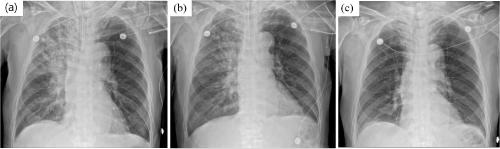
Case: A 78-year-old male patient without underlying disease underwent craniectomy and external ventricular drainage surgery under general anesthesia. During induction of anesthesia, patient's saturation dropped to under 80% with 100% O2 . Total atelectasis of right lung was found on portable…

Case Report | Open Access
Published on: 15 Aug 2026
Article ID: wjan.2026.h1505
Diagnosing Excessive Irrigation Fluid Intravasation During Operative Hysteroscopy: A Case Report
Excessive irrigation fluid intravasation is a rare but potentially life-threatening complication of operative hysteroscopy.
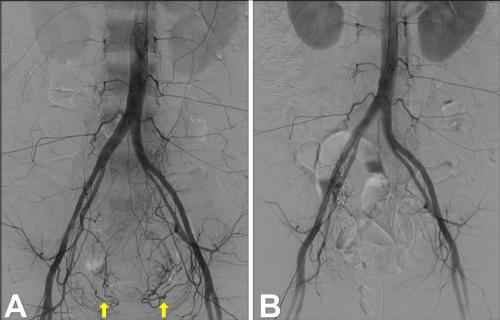
A 46-year-old woman underwent hysteroscopic endometrial polypectomy under general anesthesia using normal saline as the uterine distension medium. During surgery, an abrupt decrease in end-tidal carbon dioxide accompanied by progressive oxygen desaturation prompted a broad differential diagnosis, and subsequent arterial blood gas analysis revealed severe…


Systematic Review | Open Access
Published on: 03 Apr 2026
Article ID: wjan.2026.d0306
Research Advances on Lumbar Square Muscle Block vs. Transverse Abdominis Plane Block for Postoperative Pain Management in Hernia Repair Surgery
This paper systematically reviews research progress on lumbar quadratus lumborum block and transverse abdominis plane block for postoperative pain management following hernia repair. It compares the similarities and differences in clinical application between lumbar quadratus lumborum block and transverse abdominis plane block techniques, and thoroughly analyzes the role and efficacy of both block techniques in postoperative pain management. The study explores factors influencing…

Research Article | Open Access
Published on: 22 Jan 2026
Article ID: wjan.2026.a2209
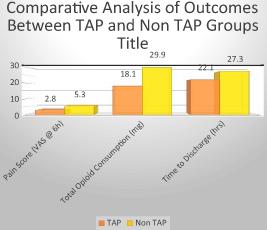
Assessing the Benefits of Standardizing Transversus Abdominis Plane (TAP) Block in Laparoscopic Surgeries: A Retrospective Study
Background: Effective postoperative pain control is a key determinant of recovery following laparoscopic surgery. Transversus Abdominis Plane (TAP) block is widely used as part of multimodal analgesia to reduce postoperative pain and opioid consumption. However, real world evidence comparing analgesic outcomes associated with TAP block use in routine clinical practice remains limited.
Aim: To assess the association between the use of TAP block…

Case Report | Open Access
Published on: 01 Jan 2026
Article ID: wjan.2026.a0104
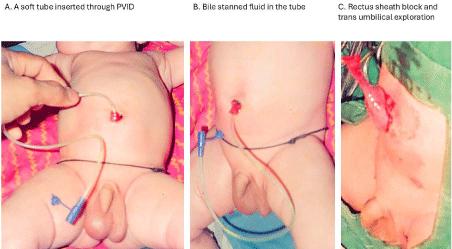
Scarless Trans‑Umbilical Wedge Resection of a Prolapsed Vitellointestinal Duct Under Rectus Sheath Local Anesthesia Block in an Infant: A Case Report
This manuscript describes a rare and clinically significant case of a prolapsed vitellointestinal duct (VID) in a 6‑week old‑old infant, successfully managed using a scarless trans‑umbilical wedge resection performed entirely under local anesthesia. While VID anomalies are well documented, the use of a minimally invasive, awake surgical approach in an infant is exceptionally uncommon. Our report highlights a safe and effective alternative to general anesthesia in selected infants, a…

Research Article | Open Access
Published on: 05 Dec 2025
Article ID: wjan.2025.l0501
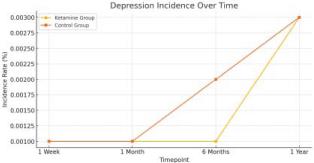
Ketamine and Pediatric PTSD: A Retrospective Analysis of Risk Following Anesthesia for Fractures
Introduction: Ketamine is widely used for pediatric procedural sedation, but its long-term psychological effects remain unclear. This study examines the incidence of post-traumatic stress disorder (PTSD) and depression in children receiving ketamine versus other anesthetics for fracture management.
Methods: A retrospective cohort study was conducted on 677,189 children aged 6–18 who received ketamine or another anesthetic. After 1:1 propensity…

Research Article | Open Access
Published on: 03 Dec 2025
Article ID: wjan.2025.l0304
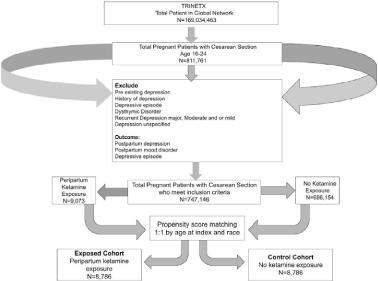
Comparison of Postpartum Depression Incidence in Patients Undergoing Cesarean Section with and Without Ketamine Use: A Retrospective Cohort Study
Ketamine is increasingly being explored as a treatment for depression and has been studied for its potential prophylactic effects in postpartum depression (PPD). This study aims to analyze data from a large population to determine ketamine's efficacy in preventing PPD in patients without a prior history of depression and mitigating symptom escalation in those with a history of depression. Using data from TriNetX, a global health research network, we compare the incidence of PPD among…

Case Report | Open Access
Published on: 01 Dec 2025
Article ID: wjan.2025.l0101
Post-Anesthesia Spinal Epidural Hematoma Leading to Cord Compression
An interesting rare case of post-anesthesia spinal epidural hematoma leading to cord compression in an 18-year-old girl having pelvic and bi-lobar hepatic metastatic masses which required operative intervention by laminectomy decompression has been reported. Patient had laparotomy for a pelvic mass with hepatic metastasis for staged debulking and the complication developed on 4th post operative day during mobilization and the anesthesiology, pain control, neurology and surgical teams…