Archived Articles

Research Article | Open Access
Published on: 10 Aug 2026
Article ID: wjmd.2026.h1008
Hand-Grip Strength and Respiratory Muscle Endurance in Regular Versus Irregular Salah Performers: A Comparative Cross-Sectional Study in Adult Males
Background: Habitual physical inactivity is a principal driver of both reduced peripheral muscle strength and declining respiratory muscle endurance in working-age adults, contributing to premature functional decline and increased musculoskeletal morbidity. Daily Islamic prayer (Salah) involves repeated cycles of closed kinetic-chain upper limb loading during prostration (Sujood), sustained isometric trunk and thoracic activation throughout postural transitions, and…

 DOI: 10.5281/zenodo.22069279 »
Review Article | Open Access
Published on: 10 Aug 2026
Article ID: wjmd.2026.h1009
Hamstring Flexibility and Dynamic Postural Stability in Adult Males: A Comparative Analysis Based on Salah Practice Regularity
Background: Daily Islamic prayer (Salah) involves a sequence of whole-body postural movements repeated multiple times each day. Although it is among the most widely observed religious practices globally, its quantifiable contribution to physical fitness domains such as posterior chain extensibility and dynamic stability has not been thoroughly examined through objective instrumentation.
Objectives: To determine whether regular participation in…

Review Article | Open Access
Published on: 31 Jul 2026
Article ID: wjmd.2026.g3101
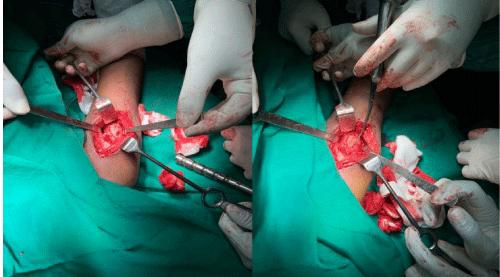
Osteoid Osteoma of the Proximal Humerus Presenting as Persistent Shoulder Pain in an Adolescent: A Rare Case Report and Review of Literature
Background: Osteoid osteoma is a benign osteoblastic neoplasm accounting for approximately 10–12% of benign bone tumors. It commonly affects the femur and tibia in adolescents and young adults. Proximal humeral involvement is uncommon and may mimic more prevalent causes of shoulder pain, resulting in delayed diagnosis.
Case Presentation: A 17-year-old male presented with a six-month history of persistent right upper arm pain that was more…

Perspective | Open Access
Published on: 17 Jun 2026
Article ID: wjmd.2026.f1703
Anterior Cruciate Ligament Injury and Pre-Existing Neuromusculoskeletal Dysfunctions: 30 Years of Clinical Observations and Theoretical Correlation with the Kinetic Chain
Anterior cruciate ligament (ACL) injuries are among the most studied musculoskeletal injuries and are traditionally associated with athletic activity. However, long-term clinical physiotherapy experience suggests that a considerable number of ACL injuries occur in non-athletic populations and often follow events described as “accidental”.
The aim of this article is to present 30 years of clinical observations suggesting that pre-existing neuromusculoskeletal…

Review Article | Open Access
Published on: 26 Feb 2026
Article ID: wjmd.2026.b2601
Multimodal Biomechanical, Neuromuscular, and Sensorimotor Alterations Associated with Prolonged Smartphone Use and Their Response to Targeted Physiotherapy Intervention
Smartphone use has emerged as a significant risk factor for cervical musculoskeletal dysfunction, yet the integrated mechanistic pathways remain inadequately characterized. This study examined the temporal relationship between smartphone exposure and biomechanical, neuromuscular, and sensorimotor alterations in the cervical spine, coupled with physiotherapy-driven recovery mechanisms. We conducted a prospective, randomized controlled trial with 94 asymptomatic to minimally symptomatic…

Research Article | Open Access
Published on: 26 Feb 2026
Article ID: wjmd.2026.b2602
Comparative Effectiveness of Intermittent Neuromuscular Electrical Stimulation Versus High-Fruit-and-Vegetable Dietary Intervention as Complementary Therapies in Cervicogenic Headache Management: A Randomized Controlled Trial with Mechanistic Outcomes
Cervicogenic Headache (CGH), originating from cervical musculoskeletal dysfunction and associated neuropathological cascades, represents a significant clinical burden affecting 2.5-4.1% of the global population with limited evidence-based complementary intervention strategies. This randomized controlled trial evaluated the comparative effectiveness of Intermittent Neuromuscular Electrical Stimulation (INES) versus High Fruit-and-Vegetable (HFV) dietary intervention as adjuncts to standard…

Research Article | Open Access
Published on: 28 Jan 2026
Article ID: wjmd.2026.a2806
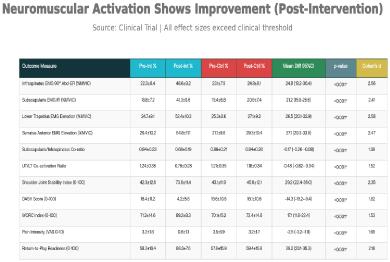
Neuromuscular Adaptations of the Rotator Cuff and Scapular Stabilizers Following TheraBand-Based Throwing Training in Symptomatic Volleyball Players with Shoulder Internal Rotation Deficit: A Randomized Controlled Trial
Background: Glenohumeral Internal Rotation Deficit (GIRD) rehabilitation literature lacks comprehensive neuromuscular analysis explaining motor control mechanisms underlying elastic resistance training effectiveness. Current evidence emphasizes range of motion and pain outcomes without addressing rotator cuff and scapular stabilizer activation patterns or co-contraction dynamics essential to shoulder stability.
Objective: This randomized…

Research Article | Open Access
Published on: 28 Jan 2026
Article ID: wjmd.2026.a2807
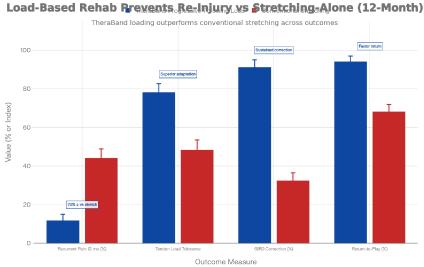
Comparative Effects of Progressive TheraBand Throwing Load Versus Conventional Stretching on Posterior Shoulder Tightness, Internal Rotation Deficit, and Tendon Load Tolerance in Volleyball Players: A Randomized Controlled Trial
Background: Despite widespread clinical adoption of stretching interventions for Glenohumeral Internal Rotation Deficit (GIRD) management in overhead athletes, evidence supporting long term GIRD correction and recurrent injury prevention remains limited. Conversely, little empirical evidence exists characterizing how progressive resistance loading affects posterior shoulder tightness resolution, internal rotation deficit correction, and critically, tendon load tolerance…

Research Article | Open Access
Published on: 08 Jan 2026
Article ID: wjmd.2026.a0805
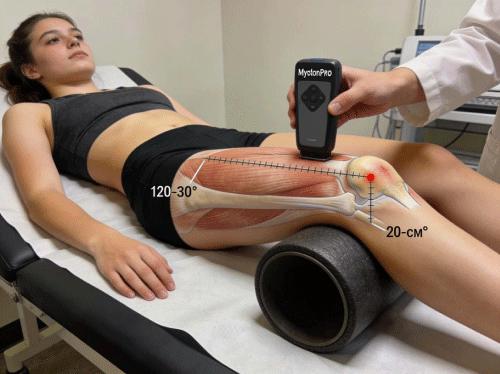
Association Between Quadriceps Muscle Stiffness and Patellofemoral Joint Loading in College Students with Anterior Knee Pain
Background: Anterior knee pain (AKP), commonly termed patellofemoral pain syndrome, represents the most prevalent lower extremity complaint in college-aged populations, affecting approximately 25% of physically active students. While quadriceps muscle weakness has been extensively characterized in patellofemoral pain pathophysiology, the role of muscle stiffness—a distinct biomechanical property reflecting tissue resistance to deformation—remains inadequately explored.…

Case Presentation | Open Access
Published on: 01 Jan 2026
Article ID: wjmd.2026.a0102
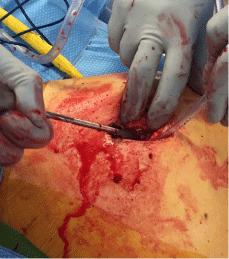
‘Schanz Pin Extractor’ Technique for Removal of a Broken Intramedullary Nail
Intramedullary nail removal is an uncommon but complicated procedure with significant surgical challenges, especially in the case of a broken nail. There are multiple cumbersome techniques for nail removal described that are frought with difficulty. We present a technique designed to take advantage of the difference in metallurgy of a stainless steel Schanz pin and a cannulated titanium intramedullary nail. We use a 5.0 mm self-tapping Schanz pin that is able to be drilled into the softer…