Recently Published Articles

Review Article | Open Access
Published on: 10 Oct 2026
Article ID: wjnfs.2026.j1005
The Use of Tongkat Ali in Andrology: The Available Evidence
Tongkat Ali (Eurycoma longifolia Jack), a traditional Southeast Asian medicinal plant, has garnered increasing scientific interest for its potential benefits in male reproductive health, androgen deficiency, and overall physiological performance. This paper synthesizes three decades of research, integrating experimental studies, mechanistic insights, and clinical investigations.
Preclinical evidence demonstrates that Tongkat Ali enhances sexual motivation, libido, penile reflexes,…

 DOI: 10.5281/zenodo.23338302 »
Research Article | Open Access
Published on: 28 Sep 2026
Article ID: wjnfs.2026.i2804
Entrepreneurial Skills and Sustainable Food Business Practices Among Small and Medium-Sized Food Enterprises in Nigeria
This study examined the relationship between entrepreneurial skills and sustainable food business practices among Small and Medium-sized food Enterprises (SMEs) in Nigeria. The study specifically investigated the relationships between opportunity recognition skills, innovation skills, and sustainable food business practices. A correlational research design was adopted. The population consisted of 9,502 small and medium-sized food enterprises across Akwa Ibom, Bayelsa, Cross River, Delta, Edo…

Research Article | Open Access
Published on: 24 Sep 2026
Article ID: wjnfs.2026.i2403
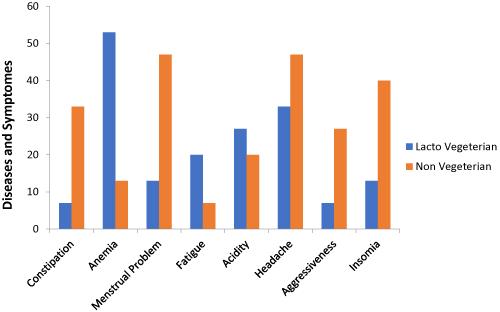
A Comparative Study on Health Status Between Lacto Vegetarian and Non-Vegetarian Adolescent Girls
The objective of this study was to observed and find out the anthropometric alteration and different health related disease and symptoms between lacto-vegetarian and non-vegetarian adolescent girls due to intake of lacto-vegetarian and non-vegetarian diet. In this study a survey was conducted to compare health status between two dietary groups (lacto and non-vegetarian) in adolescent girls. The survey was carried out at Bhagwanpur-II and Contai -II & III block area, Purba Medinipur, West…

Research Article | Open Access
Published on: 03 Sep 2026
Article ID: wjnfs.2026.i0306
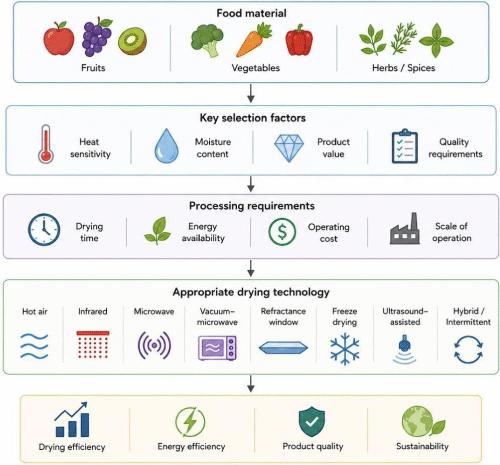
Emerging Food-Drying Technologies for Nutritional Quality Preservation and EnergyEfficient Processing: A Review
Food drying is an essential preservation operation in the food industry and contributes to the development of shelf-stable ingredients and consumer products. Industrial food-drying technologies, including pretreatments, processing methods, equipment, and quality-control systems, have advanced considerably in recent years. Novel approaches, including microwave assisted drying, ultrasound-assisted drying, high-electric-field drying, heat-pump drying, and refractance-window drying, have…

Research Article | Open Access
Published on: 29 Aug 2026
Article ID: wjnfs.2026.h2906
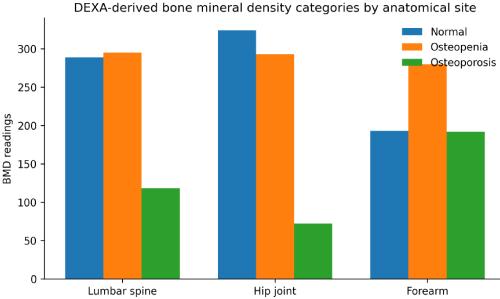
The Metabolic Architecture of Bone Health: Vitamin D, Adiposity, and DXA-Derived Skeletal Phenotypes
Background: Vitamin D is essential for calcium absorption, skeletal mineralization, and musculoskeletal health. However, the relationship between serum 25-Hydroxyvitamin D [25(OH) D], Body Mass Index (BMI), and DEXA-defined osteopenia or osteoporosis remains debated, particularly in populations with heterogeneous nutritional, lifestyle, and clinical risk factors.
Objective: This study evaluated the distribution of vitamin D status and Bone Mineral…

Research Article | Open Access
Published on: 13 May 2026
Article ID: wjnfs.2026.e1301
Isolation of Disease Causing Organisms of Kolanut and Types of Kola Buds
Isolation and identification of fungi pathogens causing kolanut spoilage across Markets in Awka was carried out using standard laboratory procedures. Randomized block sampling method was used in sample collection for the study. Potato dextrose agar was used to prepare innocula for the diseased kolanuts collected. The results of the study revealed the presence of Aternaria alternata, Fusarium oxysporum, Aspergillus niger and Aspergillus flavus. Aspergillus niger was absent only in kolanut…

Research Article | Open Access
Published on: 13 May 2026
Article ID: wjnfs.2026.e1302
Diseases of Coconut Seedlings at Nursery Stage in Awka, Anambra State
The Coconut (Cocos nucifera) fruit is a fibrous drupe with multiple uses and is widely disseminated on almost all continents. Coconut production is threatened by diseases causing significant economic losses. This study investigated Diseases of Coconut Seedlings at Nursery Stage in Awka, Anambra State. The study was carried out in two nurseries, one in Oby Okoli and another in Udoka Estate. The medium used for the isolation of pathogens in the samples collected was Sabouraud Dextrose Agar…

Research Article | Open Access
Published on: 13 May 2026
Article ID: wjnfs.2026.e1303
Control of Yam Rots with Botanicals: Xylopia aethiopica (Uda) and Piper guineense (uziza) Seeds Extract
The isolation and identification of fungi pathogens causing yam rot across markets in Awka and the control of this rot using botanicals was carried out using standard laboratory procedures. Randomized block sampling was used in the sample collection for this study. For the in vitro analysis, potatoes dextrose agar was used to prepare innocula for the 4 unhealthy yam tubers collected. Aqueous extract of seeds of Xylopia aethiopica and Piper guineense was used for growth inhibition treatment…

Review Article | Open Access
Published on: 13 Apr 2026
Article ID: wjnfs.2026.d1302
Role of Natural Textile Dyes in Food and Nutrition
Natural textile dyes, derived from plants, animals, and microorganisms, are increasingly used in food and nutrition to replace synthetic colorants due to their safety, sustainability, and health-promoting properties. These colorants (e.g., turmeric, beetroot, chlorophyll) often provide antioxidant, anti-inflammatory, and antimicrobial benefits.