Recently Published Articles

Editorial | Open Access
Published on: 17 Oct 2026
Article ID: wjccr.2026.j1703
Gender Euphoria
This editorial explores the conceptual, clinical, and humanistic dimensions of gender euphoria, challenging the medical establishment’s historical reliance on a deficit-based model centered solely on gender dysphoria. Originating within grassroots trans communities and substantiated by contemporary psychological research, gender euphoria refers to the profound sense of joy, somatic relief, and peace experienced when an individual’s internal gender identity aligns with their outward…

 DOI: 10.5281/zenodo.23607724 »
Case Report | Open Access
Published on: 05 Aug 2026
Article ID: wjccr.2026.h0504
Vildagliptin-Induced Thrombocytopenia: A Case Report with Pharmacovigilance Perspective
Vildagliptin, a Dipeptidyl Peptidase-4 (DPP-4) inhibitor widely used in type 2 diabetes mellitus, is generally considered well-tolerated. We report a case of a 62-year-old woman who developed progressive, isolated thrombocytopenia approximately ten months after initiating vildagliptin 50 mg twice daily as an add-on to her existing antidiabetic regimen. Extensive haematological evaluation excluded alternative aetiologies including immune thrombocytopenic purpura, viral infections,…


Short Communication | Open Access
Published on: 25 Jul 2026
Article ID: wjccr.2026.g2503
A Night Without Sleep: A Reflection on Vigilance, Care, and the Biological Mind in a Hospital Setting
A single night in a hospital, spent accompanying a child, can reveal a complex interaction between biological rhythms, environmental unfamiliarity, and emotional attachment. This reflective commentary examines the experience of being physically exhausted yet unable to sleep in a hospital environment. Drawing on insights from sleep science, psychology, and ecological thinking, this reflection paper explores how unfamiliar environments trigger vigilance, how parental concern sustains cognitive…

Mini Review | Open Access
Published on: 15 Jul 2026
Article ID: wjccr.2026.g1503
The Effect of Article Processing Charge-Driven Publishing on Author Credibility and Research Integrity
The global research climate has changed as a result of the introduction of Article Processing Charges (APCs) as a primary funding mechanism for open-access publications. Although APCs have facilitated access to and dissemination of scientific knowledge, their abuse has given rise to significant ethical concerns, particularly with regard to authorship credibility and study integrity. The consequences of improperly regulated APC-driven publishing models which encourage unethical writing…

Case Report | Open Access
Published on: 29 Jun 2026
Article ID: wjccr.2026.f2902
Gitelman Syndrome Unmasked in the Setting of Hyperthyroidism: A Diagnostic Challenge in a Low Resource Setting
Gitelman Syndrome (GS) is a rare autosomal recessive renal tubulopathy caused by inactivating mutations in the SLC12A3 gene, characterised by hypokalemia, hypomagnesemia, hypocalciuria, and metabolic alkalosis. Hyperthyroidism - most commonly Graves’ disease -independently produces hypokalemia through intracellular potassium shift mediated by upregulated Na+-K+-ATPase activity, a phenomenon termed Thyrotoxic Periodic Paralysis (TPP). When these two conditions coexist, the electrolyte…

Research Article | Open Access
Published on: 26 Jun 2026
Article ID: wjccr.2026.f2601
The Rare Association of Noonan Syndrome with Tetralogy of Fallot
Background: Noonan syndrome is an autosomal dominant multisystem disorder characterized by short stature, distinctive facial features, congenital heart defects, and variable developmental delays. While pulmonary valve stenosis is the most common cardiac lesion, Tetralogy of Fallot is rarely reported in Noonan syndrome. To date, there are fewer than 60 documented cases of Noonan syndrome associated with Tetralogy of Fallot in the medical…

Case Report | Open Access
Published on: 17 Apr 2026
Article ID: wjccr.2026.d1703
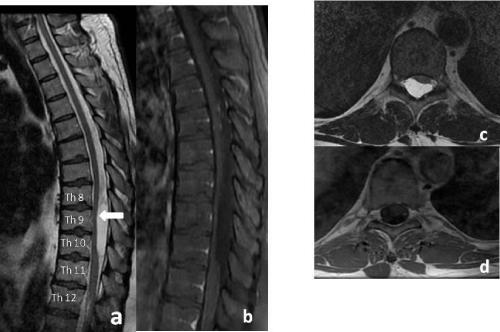
Thoracic Intradural Extramedullary Arachnoid Cyst Presenting with Neurogenic Claudication
Background: Spinal arachnoid cysts are rare, benign cerebrospinal fluid–filled lesions that may cause spinal cord or nerve root compression. They are most frequently located in the thoracic region and typically present with a slow, insidious clinical course.
Case Description: We report the case of a 52-year-old man presenting with a 3-4-year history of progressive back pain and markedly reduced walking distance consistent with neurogenic…

Case Report | Open Access
Published on: 27 Mar 2026
Article ID: wjccr.2026.c2701
Use of Sedatives and Psychotropic Drugs in Elderly Patients: A Case Report
Introduction: The use of sedatives in frail older adults represents a significant challenge in clinical and nursing practice due to age-related pharmacokinetic and pharmacodynamic changes that increase susceptibility to adverse drug reactions. Physiological alterations such as reduced hepatic metabolism, decreased renal clearance, altered protein binding, and increased blood-brain barrier permeability enhance drug accumulation and central nervous system sensitivity.…


Case Report | Open Access
Published on: 25 Mar 2026
Article ID: wjccr.2026.c2501
Severe Postpartum Thrombotic Microangiopathy Presenting with Purpura, Acute Kidney Injury, and Hepatic Dysfunction
Background: Severe thrombocytopenia in the postpartum period is a life-threatening condition requiring urgent differentiation between thrombotic thrombocytopenic purpura (TTP), disseminated intravascular coagulation (DIC), and HELLP syndrome. Early recognition significantly impacts survival.
Case Presentation: A 20-year-old previously healthy primiparous woman presented 7 days after spontaneous vaginal delivery with dyspnea, fatigue, abdominal…

Case Report | Open Access
Published on: 31 Jan 2026
Article ID: wjccr.2026.a3106
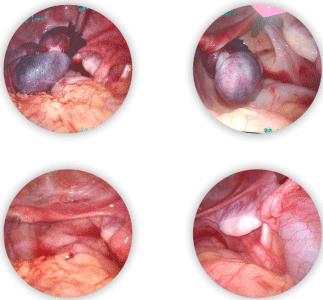
Pediatric Ovarian Torsion in an 8-Year-Old Girl: A Rare Case Report and Clinical Insights
Background: Ovarian torsion (OT) is a rare but significant gynaecological emergency that requires prompt diagnosis and intervention to preserve ovarian function. It results from the twisting of the ovary and fallopian tube around the vascular pedicle, leading to ischemia and potential necrosis. In pediatric patients, OT is particularly challenging to diagnose due to its nonspecific clinical presentation, often mimicking other causes of acute abdominal…