Recently Published Articles
Research Article | Open Access
Published on: 29 Aug 2026
Article ID: wjggr.2026.h2909
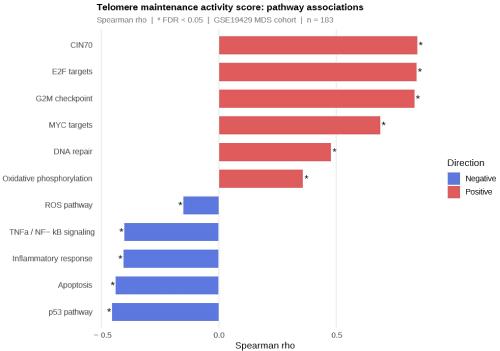
Telomere Maintenance-Associated Transcriptional States Mark a Proliferative and Genomically Unstable Axis in Myelodysplastic Syndromes
Background: Myelodysplastic Syndromes (MDS) exhibit substantial biological heterogeneity driven by diverse molecular mechanisms. While telomere dysfunction has been implicated in MDS pathogenesis, its relationship to cellular programs, clonal architecture, and clinical outcomes remains incompletely defined.
Methods: We scored a curated telomere maintenance gene set by single sample Gene Set Enrichment (ssGSEA) score of 39 curated telomere…

 DOI: 10.5281/zenodo.22537185 »
Perspective | Open Access
Published on: 27 Jul 2026
Article ID: wjggr.2026.g2703
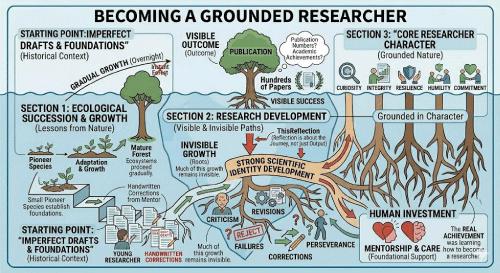
From Handwritten Corrections to Scientific Identity: Reflections on Mentorship, Hard Work, and Becoming a Grounded Researcher
Scientific publications are commonly viewed as indicators of achievement and academic productivity. However, the final published article often conceals the difficult journey that precedes its completion. This reflective paper presents personal and academic reflections stimulated by revisiting the draft of my first peer reviewed publication entitled Genetic variation of green-lipped mussel Perna viridis (Linnaeus) from the west coast of Peninsular Malaysia, which was later published in…


Research Article | Open Access
Published on: 26 Jun 2026
Article ID: wjggr.2026.f2604
A Bibliometric Analysis of Clinical Geneticists Pioneering Clinical Genetics in the Developing World
Background: Clinical genetics has advanced significantly due to the contributions of pioneering physicians, particularly in developed countries. However, less is known about the key figures shaping the field in the developing world.
Materials and Methods: This study aims to identify and evaluate the impact of clinical geneticists from 174 developing countries using bibliometric analysis. Over 1,000 Google Scholar Citation profiles were analyzed…

Research Article | Open Access
Published on: 11 May 2026
Article ID: wjggr.2026.e1102
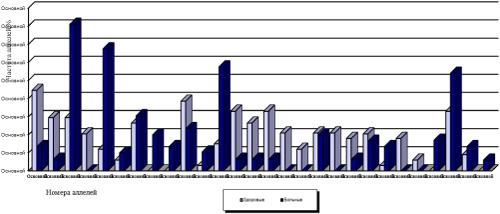
Genetic Resistance to Brucellosis in Cows of the Auliekolsky Breed
The fight against brucellosis is an important issue for global health and veterinary medicine. Brucellosis pathogens can affect not only dozens of animal species, but also humans [9, 16].
To combat brucellosis, it is important to study the immune status of animals [8, 13].
Currently, molecular genetic approaches are widely used in the world to study animal resistance to hereditary and infectious diseases. DNA markers of genetic resistance to common infectious diseases…

Review Article | Open Access
Published on: 06 Apr 2026
Article ID: wjggr.2026.d0602
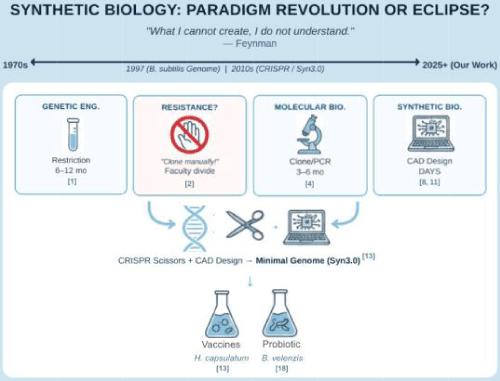
Synthetic Biology: Paradigm Revolution or Philosophical Eclipse? From Bacillus subtilis Genomics to Direct Design
Synthetic biology represents a profound transformation in the life sciences, shifting from reactive genetic manipulation to proactive, design-driven construction of biological systems. Using Bacillus subtilis genomics as a historical anchor, we trace the conceptual trajectory from genetic engineering through molecular biology to synthetic biology (SynBio), framing each transition through Thomas Kuhn’s theory of paradigm shifts. We argue that SynBio constitutes a genuine revolutionary…

Review Article | Open Access
Published on: 05 Mar 2026
Article ID: wjggr.2026.c0507
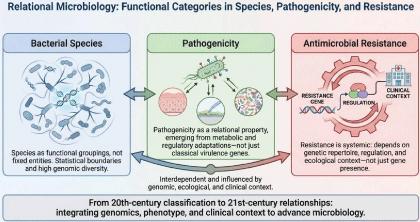
Pathogenicity, Species, and Resistance: Fixed Categories or Functional Constructs? A Call for Relational Microbiology
Classical microbiology has long relied on discrete categories to define bacterial species, pathogenicity, and antimicrobial resistance. However, comparative genomics of neglected species reveals the limitations of these rigid frameworks. Using Corynebacterium glucuronolyticum as a paradigm, we argue that these concepts are better understood as functional constructs that depend on genomic, ecological, and clinical contexts rather than fixed biological entities. This perspective challenges…