Recently Published Articles
Case Report | Open Access
Published on: 01 Oct 2026
Article ID: wjfsc.2026.j0105
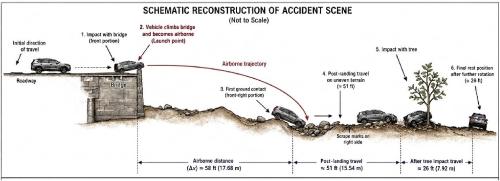
Forensic Reconstruction of an Anomalous Airborne Vehicle Trajectory Following Bridge Impact: A Physics-Based Case Study Using Projectile Motion Analysis
Reconstruction of Forensic Road Traffic Accidents (RTA) often relies on physical evidence such as tyre marks, skid marks, deformation patterns on vehicle, electronic vehicle data, and witness statements. In some rare road accident investigations, however, conventional indicators of vehicle speed are insufficient and making reliable accidence reconstruction challenging. Under such circumstances, the application of classical mechanics provides a scientific theory for determining the motion…

 DOI: 10.5281/zenodo.23301677 »
Review Article | Open Access
Published on: 30 Sep 2026
Article ID: wjfsc.2026.i3003
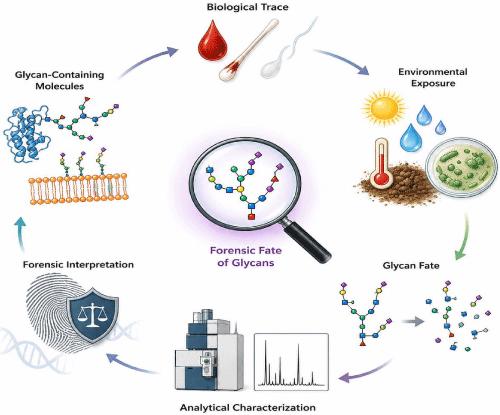
Tracing the Forensic Fate of Glycans: Environmental Transformation, Persistence, and Biological Trace Interpretation
Glycans are a relatively underexplored class of structurally diverse and biologically informative molecules in forensic biology. Glycan structures are generated through complex enzymatic pathways and can vary by cellular origin, tissue type, biological state, and individual characteristics unlike DNA and proteins. Their possible forensic significance is not restricted to their occurrence in biological matrices, since environmental conditions after deposition may influence their persistence,…

Review Article | Open Access
Published on: 30 Sep 2026
Article ID: wjfsc.2026.i3004
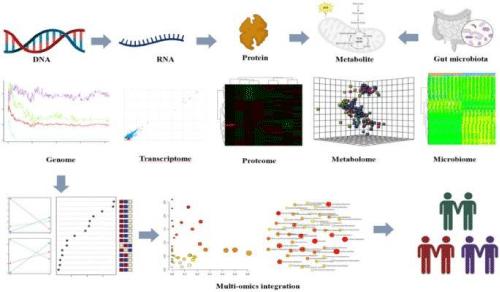
Multi-Omics Approaches in Forensic Biology: Integrating Genomics, Epigenomics, Proteomics and Microbiomics for Human Identification and Crime Scene Reconstruction
Forensic biology has traditionally been based on the use of DNA profiling as the primary method for human identification and biological evidence analysis. While conventional Short Tandem Repeat (STR) profiling is highly reliable for individual identification, it alone cannot address several important forensic questions, including the biological origin of a sample, the age of the contributor, tissue or body-fluid identification, environmental association and aspects of crime scene…

Clinical Image | Open Access
Published on: 25 Sep 2026
Article ID: wjfsc.2026.i2504
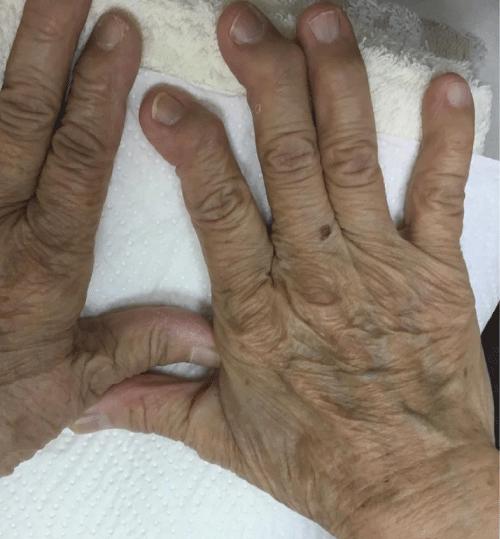
New Techniques in Rehabilitation Medicine Can Reverse the Aging Process in Joints via the Use of Low-Level Laser Therapy (LLLT)
As an introduction, LLLT (Low-Level Laser Therapy) is a physical therapy modality whereby it acts by inducing a photochemical reaction in the cell, a process referred by Professor Hamblin of Harvard as “photobiomodulation” Photo-biology works on the principle that when light hits certain molecules called chromophores, the photon energy causes electrons to be excited and jump from low-energy orbits to higher-energy orbits. LLLT not only energizes the injured cells, but improves…

Review Article | Open Access
Published on: 02 Sep 2026
Article ID: wjfsc.2026.i0202
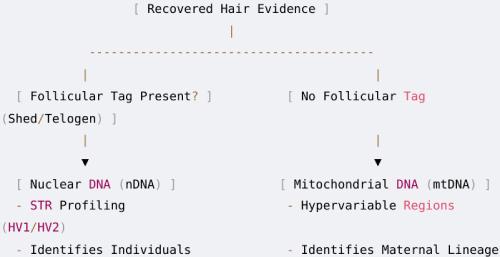
From Strand to Suspect: The Decisive Role of Hair Evidence in Modern Forensic DNA Profiling
As one of the most commonplace forms of trace evidence uncovered at crime scenes, human hair serves as a critical biological link during violent physical encounters. Historically, forensic trichology relied on microscopic evaluation-a technique invaluable for ruling out suspects but incapable of absolute individualization. However, integrating Polymerase Chain Reaction (PCR), Short Tandem Repeat (STR) profiling, and mitochondrial DNA (mtDNA) sequencing has revolutionized hair analysis,…

Review Article | Open Access
Published on: 27 Aug 2026
Article ID: wjfsc.2026.h2703
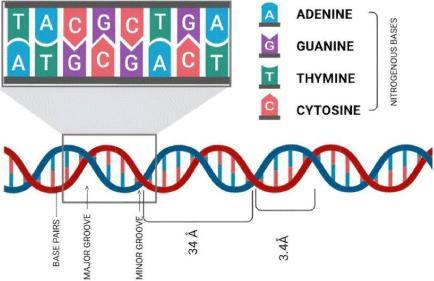
From Trace Evidence to Genetic Identification: Addressing Bottlenecks in Forensic DNA Analysis
Forensic DNA analysis is an enormous field that rapidly evolves and increases, which highlights a various number of disciplines such as biology, genetics, instrumentation. homicide, biophysics, statistical, recombinant DNA technology and more, that aims to resolve legal matters which revolves around rape, murder, robbery, paternity dispute or identification of human remains. A subfield of forensics is Criminalistics which includes the application of principle of branch of sciences like…


Review Article | Open Access
Published on: 31 Jul 2026
Article ID: wjfsc.2026.g3104
Beyond DNA: Human Microbiome Signatures in Forensic Science—Current Advances, Challenges, and Future Perspectives
Background: Forensic microbiomics is an emerging discipline that investigates the use of human associated and environmental microbial communities as complementary sources of forensic evidence. The recent development of next-generation sequencing, metagenomics, bioinformatics and computational biology has expanded the possibility to use microbiome analysis for forensic investigations, providing valuable biological information beyond conventional DNA…

Mini Review | Open Access
Published on: 25 Mar 2026
Article ID: wjfsc.2026.c2505
Crime Scene Management: Principles, Practices, and Contemporary Challenges in Forensic Investigation
Crime scene management forms the cornerstone of forensic investigation, directly influencing the integrity, admissibility, and probative value of physical evidence. Improper scene handling can irreversibly compromise investigative outcomes. This narrative review discusses the theoretical foundations, procedural frameworks, and practical dimensions of crime scene management, integrating established forensic principles with field observations from operational experience at a regional forensic…

Research Article | Open Access
Published on: 05 Mar 2026
Article ID: wjfsc.2026.c0506
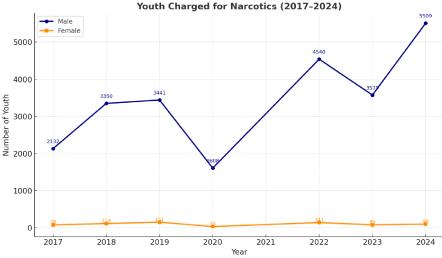
Youth Crime in Uganda, 2017–2024: Trends and Policy Imperatives
Youth crime is a growing national concern in Uganda, reflecting global patterns and country-specific social and economic pressures. This article presents the first comprehensive national overview of youth and juvenile crime from 2017–2024, drawing on Uganda Police Annual Crime Reports, JLOS data reports, and complementary statistical sources. Offences committed by young people aged 12–18 and 18–30 including theft, drug and substance abuse, assault, burglary, robbery, and sexual violence have…