
Browse Articles Online
Research Article | Open Access
Published on: 13 Apr 2026
Article ID: wjche.2026.d1301
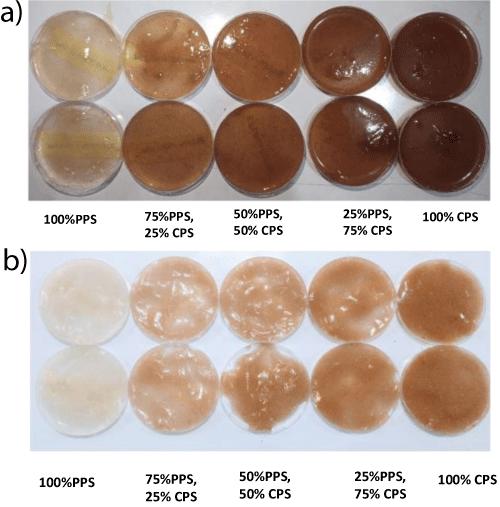
Production of Starch-Based Bioplastic from the Mixture of Potato and Cassava Peel Wastes Starch Using Glycerol as Plasticizers: A Comparison on the Effect of CaCO3 and HCl as Fillers
This study investigates the production of starch-based bioplastics from the mixture of potato and cassava peel waste starch using glycerol as plasticizer (20% wt/v) and comparing reinforcement with calcium carbonate and hydrochloric acid (4% wt/wt of filler to starch). The potato and cassava peel starch used in the production of the bioplastics were at a ratio of 3:1, 1 1, and 1:3 (wt/wt)), whereas the pure starches of the potato and cassava peel were studied as control. The physical…



Review Article | Open Access
Published on: 13 Apr 2026
Article ID: wjnfs.2026.d1302
Role of Natural Textile Dyes in Food and Nutrition
Natural textile dyes, derived from plants, animals, and microorganisms, are increasingly used in food and nutrition to replace synthetic colorants due to their safety, sustainability, and health-promoting properties. These colorants (e.g., turmeric, beetroot, chlorophyll) often provide antioxidant, anti-inflammatory, and antimicrobial benefits.

Research Article | Open Access
Published on: 13 Apr 2026
Article ID: wjbct.2026.d1303
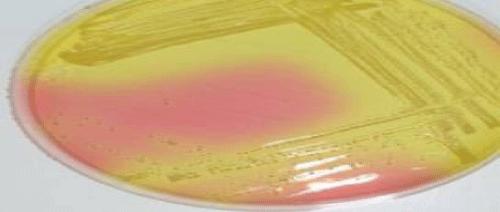
Foodborne Risks Associated with Multidrug-Resistant Escherichia coli and Staphylococcus aureus Isolated from Milk
Although milk is a vital part of the human diet, foodborne bacteria, especially those with antibiotic resistance, may spread through it. The purpose of this study was to assess the foodborne risks related to Staphylococcus aureus and multidrug-resistant (MDR) Escherichia coli that were isolated from retail milk samples. 360 milk samples in all were gathered from retail establishments and subjected to conventional bacteriological analysis. In compliance with CLSI recommendations, isolates…

Review Article | Open Access
Published on: 13 Apr 2026
Article ID: wjp.2026.d1304
PANDAS: Pediatric Autoimmune Neuropsychiatric Disorder Associated with Group A Streptococci – Pediatric Acute Neuropsychiatric Syndrome (PANS) A Comprehensive Review
Pediatric acute neuropsychiatric syndrome (PANS) and pediatric acute neuropsychiatric disorder associated with streptococcal infection (PANDAS), both are characterized by abrupt fluctuating episodes of obsessive-compulsive symptoms with other symptoms. These episodes are usually proceeded by infections with antigen mimicry speculated to be the cause of an immune dysregulation and inflammatory response. A cumulative data suggest that PANDAS is part of a systemic inflammatory response allowing…


Case Report | Open Access
Published on: 13 Apr 2026
Article ID: wjd.2026.d1306
Acquired Spiny Keratoderma in an Older Adult: Implications for Malignancy Surveillance and Longitudinal, Cost-Conscious Care
We present a case of a 72-year-old man with a 30-year history of palmar spiny keratoderma and prior unprovoked deep vein thrombosis. Lesions demonstrated partial improvement with topical keratolytics and retinoids, though treatment adherence was limited by medication cost, necessitating reliance on mechanical exfoliation and over-the-counter alternatives.
Spiny keratoderma is a rare skin disorder featuring small keratotic projections from the palms and may also affect the soles.…

Research Article | Open Access
Published on: 06 Apr 2026
Article ID: wjcst.2026.d0601
Open Data Research Across 15 Years: A Content Analysis of Journal Articles
Over the past 15 years, the open data movement has transformed from a niche policy initiative into a global phenomenon that touches nearly every aspect of modern society. This paper presents a comprehensive content analysis of open data research published in peer-reviewed journal articles from 2010 to 2025. Through systematic review and thematic analysis, we trace the evolution of open data research across five distinct periods: Foundation (2010-2012), Growth (2013-2016), Maturation…

Review Article | Open Access
Published on: 06 Apr 2026
Article ID: wjggr.2026.d0602
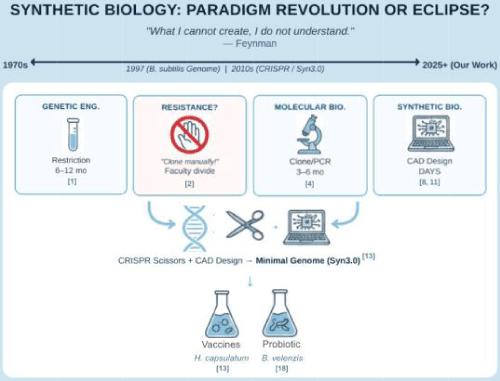
Synthetic Biology: Paradigm Revolution or Philosophical Eclipse? From Bacillus subtilis Genomics to Direct Design
Synthetic biology represents a profound transformation in the life sciences, shifting from reactive genetic manipulation to proactive, design-driven construction of biological systems. Using Bacillus subtilis genomics as a historical anchor, we trace the conceptual trajectory from genetic engineering through molecular biology to synthetic biology (SynBio), framing each transition through Thomas Kuhn’s theory of paradigm shifts. We argue that SynBio constitutes a genuine revolutionary…

Research Article | Open Access
Published on: 06 Apr 2026
Article ID: wjsmp.2026.d0603
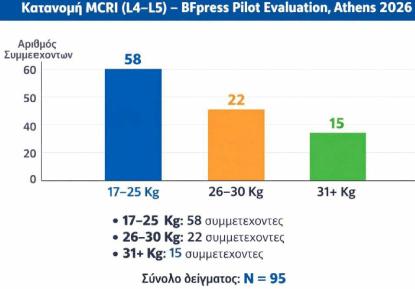
BFpress Method: Pilot Evaluation of Muscle Compression Resistance Index (MCRI) at the 33rd Athens Physiotherapy Conference
This pilot study aimed to evaluate muscle resistance using a novel device (BFpress) and a newly proposed index, the Muscle Compression Resistance Index (MCRI). Data were collected from 95 participants during the 33rd Scientific Physiotherapy Conference in Athens (2026). Measurements were performed bilaterally at the L4–L5 paraspinal level.
Participants were categorized based on MCRI values: <25 kg, 25–35 kg, and >35 kg. The majority (61%) demonstrated increased muscle resistance…

Research Article | Open Access
Published on: 06 Apr 2026
Article ID: wjms.2026.d0604
Impact of Exclusive Cannabis Use on Lung Function and Asthma Control: A Comparative Retrospective Study
This retrospective study evaluates the respiratory impact of exclusive cannabis use via traditional pipes in asthmatic patients (n=7) compared to a non-smoking control group (n=54) to assess the clinical and functional consequences of this practice. The results demonstrate increased morbidity among cannabis users, marked by a high prevalence of dry cough (71%) and dyspnea (57%), as well as significant lung function impairment with a mean FEV1 of 65% and a Tiffeneau index of 0.60. The study…

Research Article | Open Access
Published on: 06 Apr 2026
Article ID: wjms.2026.d0605
Clinical Phenotypes and Lung Function Patterns in Severe Asthma
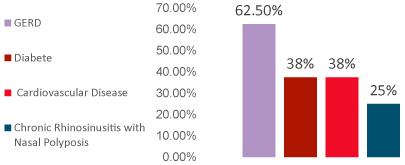
Conducted on a cohort of 150 patients followed at the Respiratory Diseases Department of the 20 August 1953 Hospital in Casablanca between 2019 and 2023, this retrospective and analytical study outlines the profile of severe asthma in a Moroccan referral center. The study population has a mean age of 36 years with a female predominance (58%) and high exposure to environmental humidity (46%), while the clinical profile is dominated by allergic rhinitis (56%) and gastroesophageal reflux…