Archived Articles
Research Article | Open Access
Published on: 03 Aug 2026
Article ID: wjcacr.2026.h0302
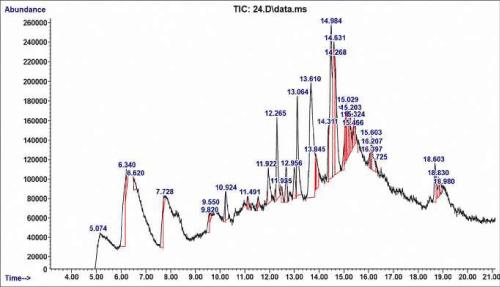
Anticonvulsant, Antioxidant, And In Vitro Cytotoxicity Activities of Leucaena leucocephala (Lam.) de Wit (Fabaceae) Leaf Methanol Extract
Although Leucaena leucocephala has long been used for its hepatoprotective, anticonvulsant, antioxidant, and anticancer properties, there has been no rigorous pharmacological validation. The anticonvulsant, antioxidant, and in vitro cytotoxic activities of L. leucocephala leaf methanol extract were investigated as the aim of the study. The presence of flavonoids, tannins, phenols, saponins, alkaloids, and terpenoids was verified by phytochemical screening. DPPH, ABTS, and FRAP tests were…

 DOI: 10.5281/zenodo.21862134 »
Research Article | Open Access
Published on: 09 Jul 2026
Article ID: wjcacr.2026.g0904
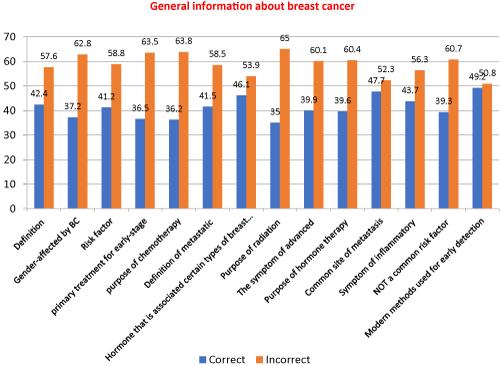
Breast Cancer Female Workers’ General Knowledge
Background: Breast cancer stages include lobular carcinoma in situ, which is often not classified as cancer, but rather lobular neoplasia. Mammography is recommended for screening without obvious symptoms. Treatment options include hormone therapy, chemotherapy, radiation therapy, surgery, and targeted therapy. Surgery is the most popular course, with various techniques like lumpectomy and mastectomy. Chemotherapy is a medication-based treatment that kills or inhibits cancer…


Narrative Review | Open Access
Published on: 17 Jun 2026
Article ID: wjcacr.2026.f1704
Cancer Management in Extremely Elderly Patients: Applying Comprehensive Geriatric Assessment in High Burden Settings
The demographic shift toward an aging population has resulted in an increasing number of extremely elderly patients (aged 80 years and above) presenting with cancer diagnoses. This population presents unique challenges in oncological care, characterized by physiological vulnerability, multiple comorbidities, polypharmacy, and diminished functional reserves. Comprehensive Geriatric Assessment (CGA) has emerged as an essential tool for optimizing treatment decisions and improving outcomes in…

Review Article | Open Access
Published on: 11 Jun 2026
Article ID: wjcacr.2026.f1107
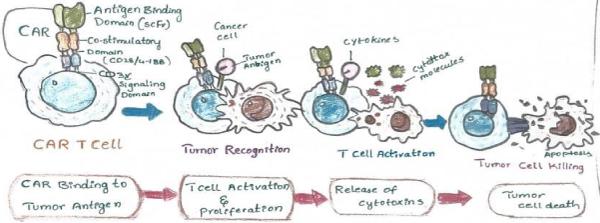
Application of Genomics in CAR T-Cell Therapy: A Comprehensive Review
Cancer is a genetically driven disease characterized by the progressive accumulation of somatic mutations, chromosomal aberrations, epigenetic dysregulation, and transcriptional reprogramming that collectively promote malignant transformation and immune escape. This genomic instability generates profound tumour heterogeneity, driving therapeutic resistance, immune evasion, and disease relapse. These challenges have accelerated the development of precision immunotherapies, such as chimeric…

Research Article | Open Access
Published on: 01 May 2026
Article ID: wjcacr.2026.e0101
An Investigation of the Association Between Periodontal Disease and Cutaneous Melanoma: A Case-Control Study in Greek Adults
Background/Aim: Previous investigations have showed biological linkages between Periodontal Disease and various types of cancer, such as oral/head and neck cancer, gastric cancer, esophageal cancer, kidney cancer, lung cancer, prostate cancer, hematological malignancies, and cutaneous melanoma. This research investigation aimed to assess the possible association between Periodontal Disease indices and the risk of Cutaneous Melanoma.
Materials and…

Research Article | Open Access
Published on: 23 Apr 2026
Article ID: wjcacr.2026.d2301
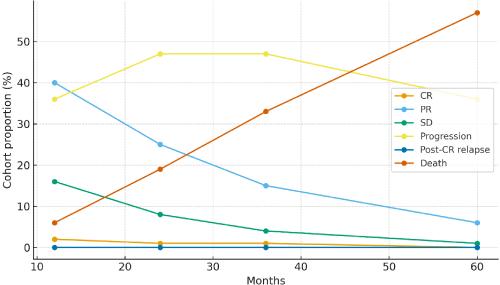
Continuous - Time Markov Modeling of Durvalumab Dynamics after Chemoradiotherapy in Stage III NSCLC (PACIFIC Era): Development, Validation, and Extrapolation
Background: Immunotherapy in un-resectable stage III NSCLC shows delayed treatment effects and time-varying hazards that challenge proportional-hazards assumptions. We developed a Continuous-Time Markov Chain (CTMC) model - with piecewise hazards - to capture the temporal dynamics of durvalumab after chemoradiotherapy (PACIFIC era), enabling transparent extrapolation beyond early trial landmarks.
Methods: We specified a multi-state CTMC with…

Case Report | Open Access
Published on: 13 Feb 2026
Article ID: wjcacr.2026.b1302
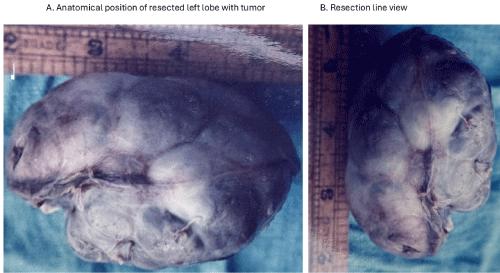
Congenital Neonatal Infected and Bleeding Hepatic Hamartoma Presenting as a Falciform Ligament Abscess, Successfully Treated by Emergency Left Hepatic Lobectomy, with Subsequent Development of Infantile Hemihypertrophy
Mesenchymal Hamartoma of the Liver (MHL) is a rare benign hepatic pediatric tumor of infancy with approximately 20% of cases diagnosed during the neonatal period, typically presenting as an enlarging abdominal mass. Rare acute complications such as intralesional bleeding and infection can lead to rapid clinical deterioration. Neonatal presentation with infection, haemorrhage, and extension along the falciform ligament is exceptionally uncommon. We report a neonate who presented with sepsis…

Review Article | Open Access
Published on: 27 Oct 2025
Article ID: wjcacr.2025.j2701
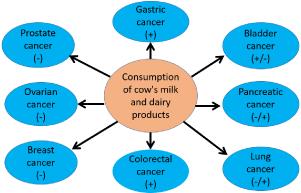
Advantages and Disadvantages of Cow's Milk Consumption for Human Health Regarding Cancer, Cardiovascular, Asthma, Autism, and Another Disease - An Overview
Cow’s milk (CM) and its products are of great importance as food for human consumption. This study highlights the advantages and disadvantages of using CM for human health. The use of CM in nutrition has been known for a very long time and occupies a special place in nutrition. CM is a complete nutrient, provides us with energy in the form of lactose and fat, is rich in protein, the most important building block of all body cells, and contains numerous vitamins and minerals, especially…

Research Article | Open Access
Published on: 15 Sep 2025
Article ID: wjcacr.2025.i1502
Breast Milk-Derived Exosomes as Natural Nanocarriers in Cancer Therapy in Adults
Breast milk is a bioactive fluid known for its nutritional value for infants, but recent studies have uncovered its potential beyond early life care. Among its components, breast milk-derived exosomes stand out. These nanoscale extracellular vesicles contain proteins, lipids, and nucleic acids and play an essential role in immune regulation and cellular communication. Given their biocompatibility, stability, and ability to cross biological barriers, these exosomes have gained attention…