Recently Published Articles
Case Series | Open Access
Published on: 11 Jul 2026
Article ID: wjed.2026.g1102
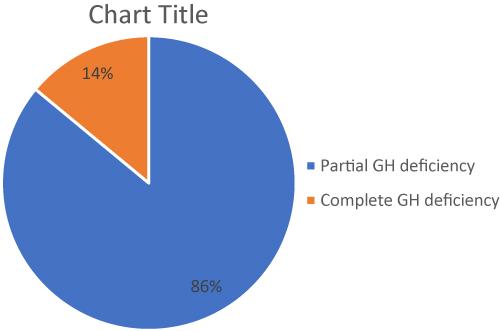
Growth Hormone Deficiency Associated with Celiac Disease Revealed by Persistent Growth Failure Despite a Gluten Free Diet: A Retrospective Case Series
Introduction: Celiac disease (CD) is an autoimmune enteropathy frequently associated with growth failure. A gluten-free diet (GFD) usually allows catch-up growth. Lack of response suggests an associated condition, particularly growth hormone (GH) deficiency.
Objective: To describe the clinical, biological, and outcome characteristics of patients with CD associated with GH deficiency.
Methods: This retrospective study…

 DOI: 10.5281/zenodo.21459004 »

Review Article | Open Access
Published on: 26 Jun 2026
Article ID: wjed.2026.f2602
Treatment of PADAM Syndrome: An Educational Overview and Expert Opinion
Partial Androgen Deficiency in Aging Men (PADAM), also known as andropause, male climate, or late-onset hypogonadism, has been recognized since the 1950s. This article reviews the history, diagnosis, and treatment of PADAM syndrome, with a focus on recent therapeutic approaches, particularly human chorionic gonadotropin (HCG) therapy.
Keywords: PADAM Syndrome; Treatment

Case Report | Open Access
Published on: 15 Jun 2026
Article ID: wjed.2026.f1502
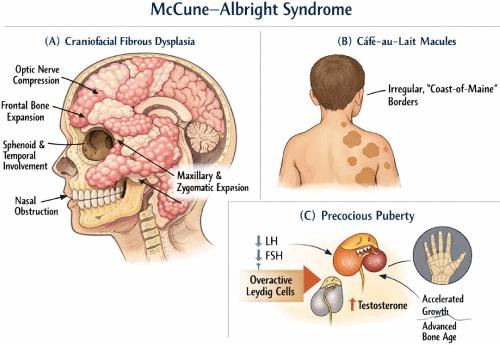
A Rare Presentation of McCune–Albright Syndrome in a Nine‑Year‑Old Boy with Giant Craniofacial Polyostotic Fibrous Dysplasia, Café‑au‑Lait Macules, and Precocious Puberty
Background: McCune–Albright syndrome (MAS) is a rare mosaic disorder classically defined by the triad of polyostotic fibrous dysplasia, café au lait macules, and endocrine hyperfunction. The full triad is uncommon, and presentation in males is particularly rare.
Case: We report a nine-year-old boy presenting with progressive craniofacial deformity, multiple café au lait macules, and signs of precocious puberty. Imaging revealed extensive expansile…

Letter to Editor | Open Access
Published on: 25 May 2026
Article ID: wjed.2026.e2509
Spontaneous Pregnancy in Sheehan’s Syndrome: A Rare But Possible Occurrence
Sheehan’s syndrome is a rare but serious cause of hypopituitarism resulting from ischemic necrosis of the pituitary gland following postpartum hemorrhage [1]. It is generally responsible for anterior pituitary hormonal deficiencies of varying severity, often associated with infertility due to involvement of the gonadotropic axis [2]. However, spontaneous pregnancy, although rare, remains possible in certain situations [3].
We report the case of a 36-year-old multiparous woman…

Case Presentation | Open Access
Published on: 01 May 2026
Article ID: wjed.2026.e0103
Non-Classical Congenital Adrenal Hyperplasia due to Partial 21-Hydroxylase Deficiency Revealed by Severe Hirsutism in Adulthood
Non-Classical Congenital Adrenal Hyperplasia (NCCAH) due to partial 21-hydroxylase deficiency is a frequent and often underdiagnosed cause of hyperandrogenism in women. We report the case of a 39-year-old woman presenting with severe hirsutism. Hormonal evaluation revealed elevated 17-Hydroxyprogesterone (17OHP), confirmed after ACTH stimulation, consistent with NCCAH. Imaging findings were normal. This case highlights the importance of systematic screening for this condition in the…

Case Presentation | Open Access
Published on: 01 May 2026
Article ID: wjed.2026.e0104
Non-Functioning Ectopic Parathyroid Adenoma Within a Lymph Node Along the Recurrent Laryngeal Nerve Chain: A Case Report and Literature Review
Ectopic parathyroid adenomas are rare and usually present with biochemical hyperparathyroidism. They most frequently occur in the mediastinum or thymic region. Localization within a lymph node along the recurrent laryngeal nerve chain is extremely rare. We report a case of a 70-year-old woman in whom a non-functioning ectopic parathyroid adenoma was incidentally discovered within a lymph node of the right recurrent laryngeal nerve chain during surgery for a suspicious thyroid nodule.…

Letter to Editor | Open Access
Published on: 04 Apr 2026
Article ID: wjed.2026.d0404
Jaundice During Graves’ Disease: Do Not Overlook Autoimmune Hepatitis
Graves’ disease is an autoimmune disorder characterized by the presence of stimulating antibodies directed against the thyroid-stimulating hormone (TSH) receptor, leading to hyperthyroidism. It may occur in an autoimmune background and can be associated with other systemic autoimmune diseases such as rheumatoid arthritis, systemic lupus erythematosus, or Sjögren’s syndrome. Hepatic involvement during hyperthyroidism is well described and may be related either to the disease itself or to…

Case Presentation | Open Access
Published on: 27 Mar 2026
Article ID: wjed.2026.c2702
Non-Syndromic Familial Papillary Thyroid Carcinoma: Early Onset and Multifocal Presentation in a mother and Daughter – A Case Report and Updated Literature Review
Introduction: Familial non-medullary thyroid carcinoma accounts for 3-7% of differentiated thyroid cancers. It is defined by the occurrence of papillary thyroid carcinoma in at least two first degree relatives in the absence of a known hereditary syndrome.
Case Presentation: We report the case of a 56-year-old mother and her 35-year-old daughter, both diagnosed with papillary thyroid carcinoma discovered in EU-TIRADS V classified nodules.…

Case Presentation | Open Access
Published on: 13 Mar 2026
Article ID: wjed.2026.c1302
Compressive Dyshormonogenetic Goiter in Adults: Two Case Reports and an Updated Literature Review
Introduction: Dyshormonogenetic goiter is a rare cause of congenital hypothyroidism secondary to a defect in thyroid hormonogenesis. Despite early replacement therapy, a compressive multinodular goiter may appear in adulthood.
Observations: We report two patients aged 19 and 28 years, followed since childhood for congenital hypothyroidism, who developed a compressive multinodular goiter treated by total thyroidectomy. Histopathological…

Case Series | Open Access
Published on: 03 Mar 2026
Article ID: wjed.2026.c0301
Type 2 Diabetes Mellitus Associated with Behçet's Disease: A Case Series
Behçet's disease (BD) is a systemic vasculitis widely prevalent in countries along the ancient Silk Road and around the Mediterranean. Endocrine complications are uncommon in this vasculitis. Non-corticosteroid-induced diabetes mellitus remains exceptional in BD. We report three cases of BD associated with diabetes mellitus type 2 in three Tunisian patients. They are two women and a man aged 42, 37, and 48 years old respectively with mean body mass index at 22.33 kg/m². Diabetes occurred at…