
Browse Articles Online

Research Article | Open Access
Published on: 26 Jun 2026
Article ID: wjpt.2026.f2606
Turinabol: Pharmacological Properties, Experimental Studies, and Clinical Applications
Background: Turinabol (4-chlorotestosterone acetate), a synthetic anabolic steroid developed in the 1950s, has been studied for its potential therapeutic benefits in a range of medical conditions. These include muscle wasting, osteoporosis, liver diseases, and post-surgical recovery. Turinabol has a unique anabolic profile with reduced androgenic side effects compared to other anabolic steroids.
Objective: This paper aims to provide a comprehensive…


Research Article | Open Access
Published on: 26 Jun 2026
Article ID: wjpbs.2026.f2607
Fragile X Syndrome in Practice: A Clinical Dysmorphology Guide for Diagnosis Without Genetic Testing
Background: Fragile X syndrome is one of the most common inherited causes of mental retardation and a leading monogenic cause of autism spectrum disorder. Despite its well-established genetic basis, diagnosis in many low-and middle-income countries remains limited due to restricted access to molecular testing. Historically, the condition was first described by James Purdon Martin and Julia Bell in 1943, with subsequent cytogenetic characterization by Herbert Lubs. Later…

Research Article | Open Access
Published on: 26 Jun 2026
Article ID: wjphe.2026.f2608
Surpassing the Professor Rank: The H-Index as a Measure of Global Academic Leadership
Background: The H-index is a widely used metric to assess the academic productivity and citation impact of researchers. It has become particularly important in academic medicine, where physicians' research output is integral to their career progression. International organizations have a compelling need to identify world-class expert academic physicians who operate at a level above that of a typical full professor on a global scale.
This paper explores the…

Review Article | Open Access
Published on: 26 Jun 2026
Article ID: wjs.2026.f2609
The Use of Diosmin in the Treatment of Surgical Conditions: Hemorrhoids and Chronic Venous Insufficiency
Diosmin, a flavonoid compound has been extensively studied for its therapeutic potential in managing vascular conditions such as hemorrhoids and chronic venous insufficiency. This paper reviews the historical development and clinical evidence supporting the use of diosmin in both conservative and non-surgical treatments of these conditions. Diosmin’s phlebotonic and anti inflammatory properties contribute to symptom relief by enhancing venous tone, reducing edema, and alleviating…

Research Article | Open Access
Published on: 19 Jun 2026
Article ID: wjptr.2026.f1901
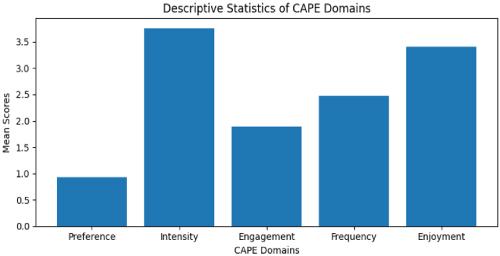
Game Na! Unpacking the Play Preferences and Social Participation of School-Age Children Diagnosed with Attention-deficit/hyperactivity disorder (ADHD) and Autism Spectrum Disorder (ASD)
This study examined the social participation and activity preferences of school-aged children diagnosed with Attention-Deficit/Hyperactivity Disorder (ADHD) and Autism Spectrum Disorder (ASD) using the Children’s Assessment of Participation and Enjoyment (CAPE) and Preferences for Activities of Children (PAC). A quantitative comparative-correlational cross-sectional design was utilized involving 55 children aged 6–12 years receiving occupational therapy services in Metro Manila, Philippines.…

Research Article | Open Access
Published on: 19 Jun 2026
Article ID: wjp.2026.f1902
Correlation of Executive Function Skills with Perceived Social Anxiety of Senior High School Students in Amparo High School
This study examined the relationship between executive function (EF) skills and perceived social anxiety of senior high school students of Amparo High School. The study was conducted using a descriptive-correlational research design and 50 students from Grades 11 and 12, mostly 17 years old. Data was collected using the Executive Skills Questionnaire-Revised (ESQ-R) to measure executive function skills across domains including working memory, cognitive flexibility, emotional control, and…

Research Article | Open Access
Published on: 19 Jun 2026
Article ID: wjp.2026.f1903
Perceived Influence of Recreational Activities on Activities of Daily Living, Academic Performance, and Social Participation among Children Ages 10–12: A Parent-Based Study
This study assessed how children aged 10 to 12 years who participated in recreational team sports performed across occupational domains. The research aimed to determine how playing team sports affects activities of daily living (ADLs), instrumental activities of daily living (IADLs), social participation, and academic performance compared to non-participating peers. The study was grounded in three theoretical frameworks: Bandura's Social Cognitive Theory, the Occupational Adaptation Theory…

Research Article | Open Access
Published on: 19 Jun 2026
Article ID: wjp.2026.f1904
Quality of Life Outcomes in Filipino Children with Autism Spectrum Disorder Attending Public Versus Private Schools Following Occupational Therapy
This study investigated whether school type (public versus private) significantly influences the quality of life (QoL) outcomes of Filipino children with Autism Spectrum Disorder (ASD) Level 1 or 2 following occupational therapy (OT). A descriptive-comparative design was employed with 51 children (ages 5–7, 75% male) attending schools in Metro Manila. The Pediatric Quality of Life Inventory (PedsQL 4.0) was administered via caregiver proxy across four domains: physical, emotional, social,…

Research Article | Open Access
Published on: 19 Jun 2026
Article ID: wjp.2026.f1905
The Correlation between Dancing and the Body Image of Teenagers with Low Self-Esteem in Antipolo City
Body image dissatisfaction and low self-esteem remain pressing mental health concerns among adolescents, increasingly amplified by social media exposure to unrealistic beauty standards. This quantitative study determined the correlation between dancing and the body image of 50 teenagers (aged 13–17) with low self-esteem from San Roque National High School in Antipolo City, Philippines. Participants were screened using the State Self-Esteem Scale (SSES) and assessed with the Body Appreciation…

Research Article | Open Access
Published on: 17 Jun 2026
Article ID: wjp.2026.f1701
Impact of Video Modeling on Emotional Dysregulatory Behaviors of Children with Autism Spectrum Disorder in Group Therapy
This study investigated the impact of video modeling (VM) on emotional dysregulatory behaviors of children with Autism Spectrum Disorder (ASD) in structured group therapy. Using a pre-test/ post-test quantitative design, four male participants aged 8–10 years with ASD Level 1 or 2 were assessed at the Exceptional Learning Center, General Trias, Cavite, Philippines. The Emotion Dysregulation Inventory (EDI) measured baseline and post-intervention levels of Reactivity and Dysphoria. The…