
Browse Articles Online
Perspective | Open Access
Published on: 12 Aug 2026
Article ID: wjets.2026.h1203
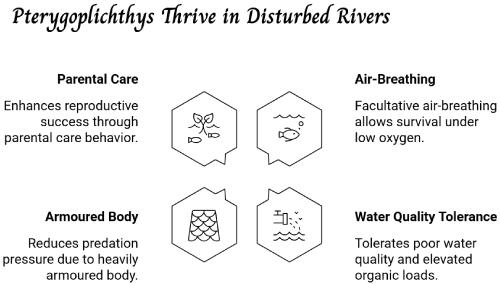
The Invasive Amazon Sailfin Catfish (Pterygoplichthys spp.) as a Potential Biomonitor of Polluted River Ecosystems in Malaysia: An Ecotoxicological Reflection
Biomonitoring is a fundamental component of ecotoxicology, providing insights into environmental quality through the responses of living organisms to pollution and habitat degradation. Traditionally, biomonitoring programmes have focused on species that accumulate contaminants or exhibit measurable physiological responses to environmental stress. In Malaysia, the invasive Amazon sailfin catfish (Pterygoplichthys spp.), commonly known as ikan bandaraya, has become widespread in urban and…


Review Article | Open Access
Published on: 12 Aug 2026
Article ID: wjacs.2026.h1204
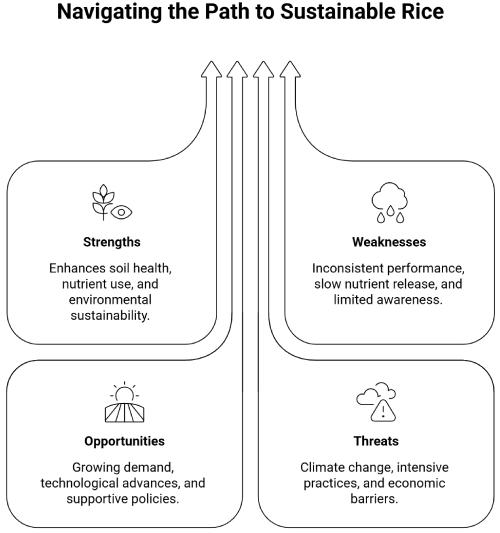
Bio-Organic Fertilizers, Biofertilizers, and Nitrogen-Fixing Biofertilizers (N-Bio Booster) Improve Paddy Productivity: A Narrative Review with SWOT Perspectives
Rice (Oryza sativa L.) is the primary staple food for more than half of the global population, making sustainable rice production essential for food security, economic development, and environmental sustainability. Conventional rice cultivation has relied heavily on synthetic fertilizers, particularly nitrogen fertilizers, to maximize grain yield. Although chemical fertilizers have significantly increased rice production over recent decades, their excessive application has contributed to…

Perspective | Open Access
Published on: 10 Aug 2026
Article ID: wjets.2026.h1001
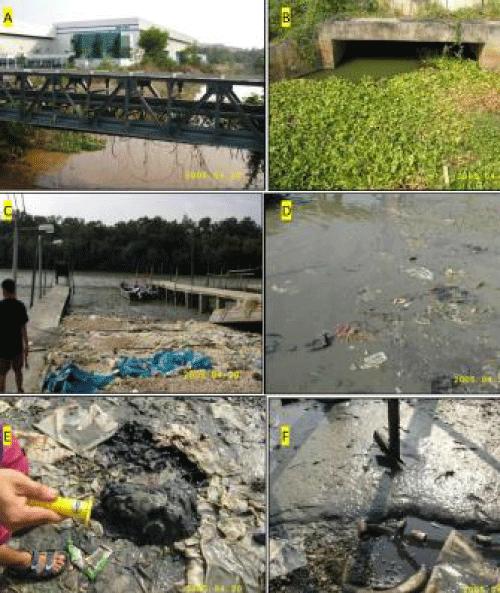
Reflections from the Filthy Mud: Environmental Wisdom and Coastal Pollution in Industrial Corridors
This paper is a reflective synthesis of long-term environmental monitoring and personal experience from two of Malaysia’s most polluted coastal ecosystems: Kuala Juru in Penang and Kg. Pasir Puteh in Southern Johore. Drawing upon empirical evidence collected in 2004 and 2005 on elevated levels of heavy metals in mussels (Perna viridis) and surface sediments, this narrative integrates ecological data with moral teachings expressed through proverbs from Hindu, Malay, Chinese, and English…


Perspective | Open Access
Published on: 10 Aug 2026
Article ID: wjacs.2026.h1002
When Food Becomes a Crown: A Reflection on Luxury Agriculture, Entitlement, and the Ethics of Nourishment
Encounters with everyday commodities can sometimes expose deeper structural and ethical tensions within modern food systems. This reflective paper examines a personal encounter with an ultra premium watermelon priced beyond ordinary affordability and marketed as the sole fruit matured on a plant for optimal sweetness and nutritional balance. Drawing on decades of experience in biology, ecotoxicology, and environmental education, this paper reflects on how such luxury oriented agricultural…

Perspective | Open Access
Published on: 10 Aug 2026
Article ID: wjets.2026.h1003
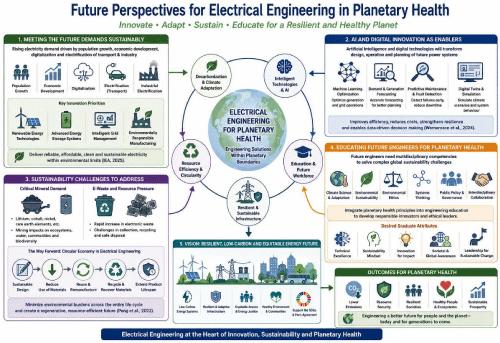
Powering Planetary Health: The Expanding Role of Electrical Engineering in Climate Resilience, Clean Energy, and Sustainable Human Development
Planetary health emphasizes that the health of human civilization depends fundamentally on the stability of Earth's natural systems. While discussions surrounding planetary health have traditionally focused on medicine, ecology, environmental sciences, and public health, the contributions of electrical engineering have received comparatively less attention despite underpinning nearly every aspect of modern society. Reliable electricity enables healthcare delivery, clean water supply,…


Research Article | Open Access
Published on: 10 Aug 2026
Article ID: wjra.2026.h1004
Neuro-Mechanical Modeling and AI-Driven Exoskeleton Control for Rehabilitation Robotics: A Comprehensive Review
In recent years, rehabilitation robotics has become a promising area of research to enhance mobility and quality of life for people with neurological and musculoskeletal impairment. Lower-limb exoskeletons are one of the most promising advances in this field, combining advanced control strategies with principles from biomechanics to improve gait rehabilitation and functional recovery. This review discusses the state of the art in neuro-mechanical modeling approaches and Artificial…

Research Article | Open Access
Published on: 10 Aug 2026
Article ID: wjptr.2026.h1005
Hamstring Flexibility and Dynamic Balance in Regular Versus Irregular Male Salah Performers: A Comparative Cross-Sectional Study
Background: Daily Islamic prayer (Salah) comprises a structured sequence of whole-body postural transitions that systematically engage the musculoskeletal and neuromuscular systems. Despite near-universal observance among practising Muslims worldwide, the extent to which habitual prayer performance influences objective measures of posterior chain flexibility and dynamic postural stability have not been rigorously established through standardised field…

Research Article | Open Access
Published on: 10 Aug 2026
Article ID: wjptr.2026.h1006
Lumbar Flexibility and Chronic Low Back Pain Prevalence in Regular Versus Irregular Salah Performers: A Comparative Cross-Sectional Study in Mixed-Gender Adults
Background: Low Back Pain (LBP) ranks among the leading causes of years lived with disability globally, with habitual physical inactivity identified as a principal modifiable risk factor. Daily Islamic prayer (Salah) involves a structured sequence of spinal flexion, extension, and postural loading that is mechanically distinct from sedentary behaviour and may exert protective effects on lumbar health. The extent to which regular Salah practice is associated with superior…

Research Article | Open Access
Published on: 10 Aug 2026
Article ID: wjptr.2026.h1007
Shoulder Mobility and Cervical Postural Alignment in Regular Versus Irregular Salah Performers: A Comparative Cross-Sectional Study
Background: Habitual physical inactivity is a recognised contributor to progressive shoulder stiffness and forward head posture, two of the most prevalent upper quadrant musculoskeletal presentations in contemporary adults. Daily Islamic prayer (Salah) imposes a structured sequence of upper limb elevation, cervical flexion and extension, and bilateral trunk rotation that may exert biomechanically meaningful stimuli on glenohumeral mobility and cervicocranial alignment. No…

Research Article | Open Access
Published on: 10 Aug 2026
Article ID: wjmd.2026.h1008
Hand-Grip Strength and Respiratory Muscle Endurance in Regular Versus Irregular Salah Performers: A Comparative Cross-Sectional Study in Adult Males
Background: Habitual physical inactivity is a principal driver of both reduced peripheral muscle strength and declining respiratory muscle endurance in working-age adults, contributing to premature functional decline and increased musculoskeletal morbidity. Daily Islamic prayer (Salah) involves repeated cycles of closed kinetic-chain upper limb loading during prostration (Sujood), sustained isometric trunk and thoracic activation throughout postural transitions, and…