
Browse Articles Online
Research Article | Open Access
Published on: 08 Aug 2026
Article ID: wjbtbe.2026.h0808
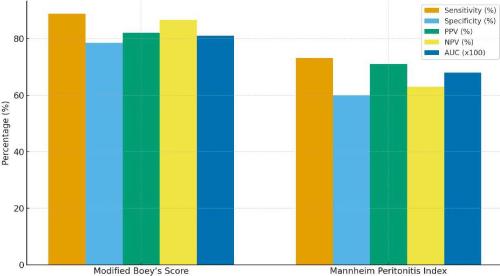
Comparative Study of Modified Boey’s Score and Mannheim Peritonitis Index in Predicting Outcome of Perforated Peptic Ulcer with Diffuse Peritonitis
Background: Perforated Peptic Ulcer (PPU) complicated with diffuse peritonitis despite all advances of diagnosis and surgical care. The timely and precise identification of prognosis is one of the most key issues to optimize peri-operative management. In this study, the Modified Boey's Score (MBS) and the Mannheim Peritonitis Index (MPI) were compared and assessed for their predictive capabilities in patients with PPU after surgery.
Methods: A…



Research Article | Open Access
Published on: 08 Aug 2026
Article ID: wjcm.2026.h0809
Pilot Study on the Relation Between Orthodox Spirituality, Inclusion and Health, In a Sample of Wheelchair Users
Persons with disabilities have significantly lower life expectancy compared to the general population. Concerning wheelchair users, the main causes of premature death are heart attack and cancer. The main risk factors are physical inactivity and obesity. Factors such as depression and social isolation seem to play also an important role. This project evaluates a religious and spiritual intervention and examines the correlation between physical, social and spiritual variables that seem to be…

Case Report | Open Access
Published on: 08 Aug 2026
Article ID: wju.2026.h0810
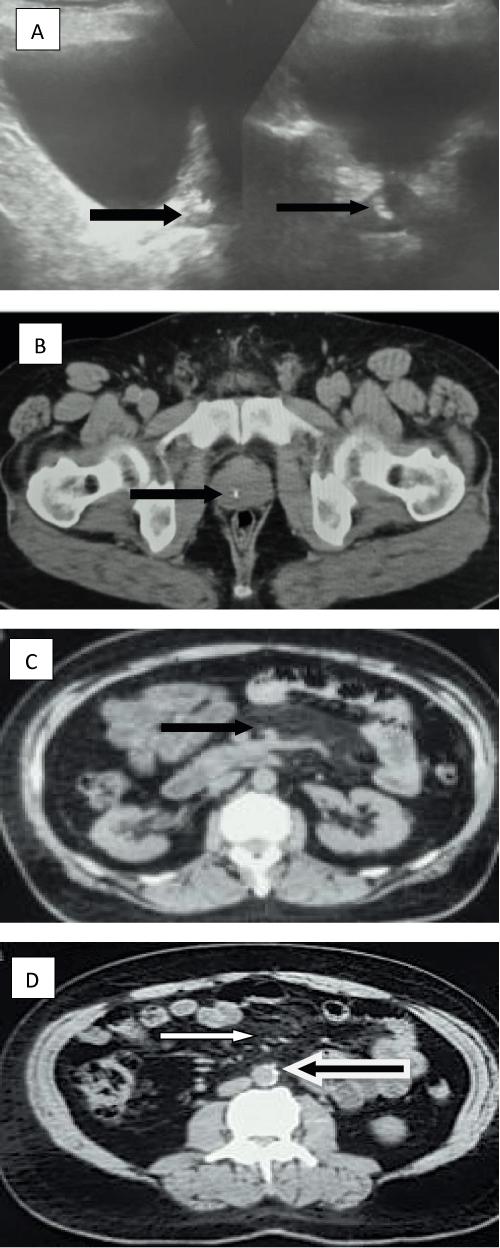
A Case of Prostatic Calcification with Mesenteric Panniculitis: Presented with Prostatic Cancer
Background: The association between prostatic calculi/calcifications, widespread atherosclerosis, and the occurrence of mesenteric panniculitis (MP) has been proposed to share molecular vulnerabilities that may be linked to the development of prostate cancer.
Case Report: We present the case of a 61-year-old man who had severe lower urinary tract irritative symptoms for more than two years, along with intermittent and recurrent abdominal pain for…

Research Article | Open Access
Published on: 08 Aug 2026
Article ID: wjog.2026.h0811
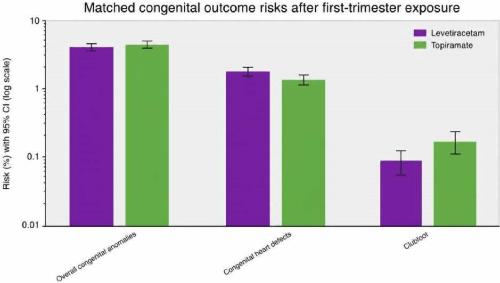
Testing the Limits: Can Federated EHR Networks Detect Teratogenic Signals?
Background: First-trimester topiramate exposure carries an approximately 2-fold increased risk of Major Congenital Malformations (MCMs) compared with levetiracetam, which has among the lowest MCM rates of Anti-Seizure Medications (ASMs). Federated Electronic Health Record (EHR) networks are increasingly used for drug safety research; however, their ability to replicate known teratogenic signals has not been extensively evaluated.
Objective: To…

Research Article | Open Access
Published on: 05 Aug 2026
Article ID: wjap.2026.h0502
The Piezoelectric Crystal Hypothesis: Towards the Development of Environmentally Integrated Electromagnetic Energy Architectures
Section I: Introduction, Historical Context and the Evolution of Distributed Energy Paradigms
The history of technological civilisation may be interpreted as a progressive refinement in humanity's capacity to access, transform and distribute energy. From the controlled use of combustion during the earliest phases of societal development to the emergence of electrification and digital computation, each successive technological revolution has been characterised by…

Research Article | Open Access
Published on: 05 Aug 2026
Article ID: wjap.2026.h0503
Exotic Nonthermal Radiation, Etheric Tension and Reciprocal Galactic Regeneration: A Theory-Building Cosmological Framework for Dark Matter Halo Formation Through Black Hole Metaparticle Emissions
Modern cosmology possesses extraordinary predictive power while simultaneously lacking explanatory closure concerning the deeper ontological origins of dark matter, dark energy, and the informational properties of black holes. Einstein's general theory of relativity successfully describes gravitational curvature, Hubble's observations established the expanding Universe, and Hawking demonstrated that black holes radiate thermally through quantum processes near event horizons. Nevertheless,…

Case Report | Open Access
Published on: 05 Aug 2026
Article ID: wjccr.2026.h0504
Vildagliptin-Induced Thrombocytopenia: A Case Report with Pharmacovigilance Perspective
Vildagliptin, a Dipeptidyl Peptidase-4 (DPP-4) inhibitor widely used in type 2 diabetes mellitus, is generally considered well-tolerated. We report a case of a 62-year-old woman who developed progressive, isolated thrombocytopenia approximately ten months after initiating vildagliptin 50 mg twice daily as an add-on to her existing antidiabetic regimen. Extensive haematological evaluation excluded alternative aetiologies including immune thrombocytopenic purpura, viral infections,…

Letter to Editor | Open Access
Published on: 05 Aug 2026
Article ID: wjets.2026.h0505
Air Pollution as a Risk Factor for Gestational Diabetes Mellitus: Time to Breathe this into Clinical Practice
The global burden of Gestational Diabetes Mellitus (GDM) continues to rise at an alarming pace, now complicating an estimated 14-25% of pregnancies worldwide [1]. While traditional risk factors - maternal obesity, advanced age, family history of type 2 diabetes - have long guided clinical vigilance, a growing and compelling body of epidemiological and experimental evidence points toward ambient air pollution as an underappreciated yet modifiable contributor to GDM pathogenesis. We write to…

Research Article | Open Access
Published on: 05 Aug 2026
Article ID: wjh.2026.h0506
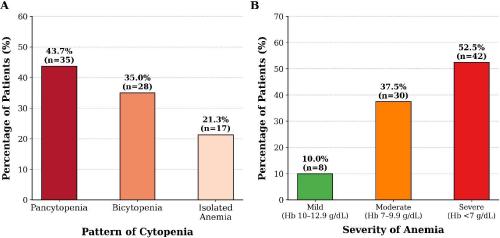
Clinico-Hematological Profile of Megaloblastic Anemia at a Tertiary Care Center in North India: A Cross-Sectional Study
Background: Megaloblastic anemia (MA) remains a prevalent yet underdiagnosed nutritional disorder in India, particularly among vegetarian populations. Despite its treatability, patients often present late with multisystem involvement.
Objective: To describe the clinico-pathologic profile of megaloblastic anemia at a tertiary care center in North India.
Methods: This cross-sectional observational study enrolled 80…

Review Article | Open Access
Published on: 03 Aug 2026
Article ID: wjra.2026.h0301
Face Recognition Systems: A Comprehensive Review of Techniques, Applications, Challenges, and Future Trends
Biometric systems are automated technologies that identify or verify individuals based on their unique physiological or behavioural characteristics, such as fingerprints, iris patterns, voice, gait, and facial features. Among these biometric modalities, face recognition has emerged as one of the most popular and widely adopted methods due to its non-invasive nature, ease of use, and capability for remote identification. Unlike other biometric techniques that require physical contact or…