
Browse Articles Online

Letter to Editor | Open Access
Published on: 15 May 2026
Article ID: wjprm.2026.e1503
The Diabetic Lung: Time to Move from Neglect to Recognition
Respected Editor,
Diabetes mellitus (DM) is universally recognized for its devastating microvascular and macrovascular complications. Yet one organ has been conspicuously absent from both clinical guidelines and everyday practice: the lung. A growing body of evidence compellingly positions the lung as a genuine target organ of chronic hyperglycemia, giving rise to the concept of “diabetic pneumopathy” - a term encompassing restrictive ventilatory impairment, reduced diffusing…


Research Article | Open Access
Published on: 13 May 2026
Article ID: wjnfs.2026.e1301
Isolation of Disease Causing Organisms of Kolanut and Types of Kola Buds
Isolation and identification of fungi pathogens causing kolanut spoilage across Markets in Awka was carried out using standard laboratory procedures. Randomized block sampling method was used in sample collection for the study. Potato dextrose agar was used to prepare innocula for the diseased kolanuts collected. The results of the study revealed the presence of Aternaria alternata, Fusarium oxysporum, Aspergillus niger and Aspergillus flavus. Aspergillus niger was absent only in kolanut…

Research Article | Open Access
Published on: 13 May 2026
Article ID: wjnfs.2026.e1302
Diseases of Coconut Seedlings at Nursery Stage in Awka, Anambra State
The Coconut (Cocos nucifera) fruit is a fibrous drupe with multiple uses and is widely disseminated on almost all continents. Coconut production is threatened by diseases causing significant economic losses. This study investigated Diseases of Coconut Seedlings at Nursery Stage in Awka, Anambra State. The study was carried out in two nurseries, one in Oby Okoli and another in Udoka Estate. The medium used for the isolation of pathogens in the samples collected was Sabouraud Dextrose Agar…

Research Article | Open Access
Published on: 13 May 2026
Article ID: wjnfs.2026.e1303
Control of Yam Rots with Botanicals: Xylopia aethiopica (Uda) and Piper guineense (uziza) Seeds Extract
The isolation and identification of fungi pathogens causing yam rot across markets in Awka and the control of this rot using botanicals was carried out using standard laboratory procedures. Randomized block sampling was used in the sample collection for this study. For the in vitro analysis, potatoes dextrose agar was used to prepare innocula for the 4 unhealthy yam tubers collected. Aqueous extract of seeds of Xylopia aethiopica and Piper guineense was used for growth inhibition treatment…

Research Article | Open Access
Published on: 13 May 2026
Article ID: wjnh.2026.e1304
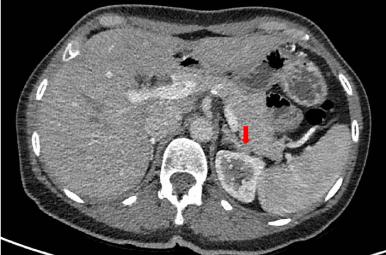
Abdominal Aortic Dissection Associated with Primary Aldosteronism: A Case Report and Review of Emerging Evidence
Primary aldosteronism (PA) is a common and potentially curable cause of secondary hypertension associated with increased cardiovascular morbidity and mortality beyond blood pressure levels. Aldosterone excess contributes to vascular damage through pro-inflammatory, pro-fibrotic and remodelling effects on the arterial wall. An association between PA and aortic diseases has been increasingly reported but remains underrecognized in clinical practice.
We report a case of a…

Research Article | Open Access
Published on: 13 May 2026
Article ID: wjptr.2026.e1305
Smartphone-Associated Musculoskeletal Syndrome (SAMS): Characterization of a Novel Clinical Entity and Evidence-Based Physiotherapy Management Framework
Background: Prolonged smartphone use has emerged as a significant but under characterized etiology of musculoskeletal dysfunction. While individual conditions such as "text neck" have been documented, no unified clinical framework defining Smartphone-Associated Musculoskeletal Syndrome (SAMS) with integrated physiotherapy management pathways has been established.
Objective: To characterize SAMS as a distinct clinical syndrome encompassing…

Research Article | Open Access
Published on: 11 May 2026
Article ID: wjvsah.2026.e1101
Using RT-PCR Method for Accelerated Health Improvement of Herd of Cows from Leukemia
The spread of enzootic leukemia is a global problem of cattle breeding
The leukemia virus causes blood disease in 29 species of animals and 15 species of domestic and wild birds. Bovine enzootic leukemia (international designation of bovine leukemia) is included in the list of diseases of the World Organization for Animal Health, as a disease subject to mandatory notification (notification to the international community). The high prevalence of bovine leukemia virus in cattle…

Research Article | Open Access
Published on: 11 May 2026
Article ID: wjggr.2026.e1102
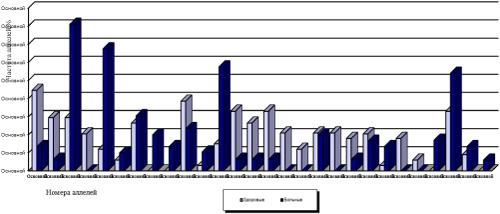
Genetic Resistance to Brucellosis in Cows of the Auliekolsky Breed
The fight against brucellosis is an important issue for global health and veterinary medicine. Brucellosis pathogens can affect not only dozens of animal species, but also humans [9, 16].
To combat brucellosis, it is important to study the immune status of animals [8, 13].
Currently, molecular genetic approaches are widely used in the world to study animal resistance to hereditary and infectious diseases. DNA markers of genetic resistance to common infectious diseases…

Research Article | Open Access
Published on: 11 May 2026
Article ID: wjacs.2026.e1103
The Effectiveness of Meadow Improvement by Mechanical Processing of Sod in Combination with Other Agricultural Practices in the North-West of the Russian Federation
For the Northwestern region of Russia, specializing in the production of dairy livestock products, the creation of highly productive meadow agrophytocenoses is of exceptional importance, since the natural conditions here are most consistent with the cultivation of perennial grasses for harvesting herbaceous fodder in a system of green and raw conveyor belts. The decisive role in this issue is played by perennial legumes, which surpass many fodder crops in terms of yield and protein…

Research Article | Open Access
Published on: 09 May 2026
Article ID: wjav.2026.e0901
Model-Based Fault Diagnosis for Aerospace Systems
This review of model-construct blame determination centers in light of those strategies that are relevant to aviation frameworks. To feature the qualities of aviation models, nonexclusive nonlinear dynamical displaying from flight mechanics is reviewed and a binding together portrayal of sensor and actuator shortcomings is displayed. A broad bibliographical audit underpins a portrayal of the key purposes of blame identification strategies that depend on explanatory repetition. The approaches…