
Browse Articles Online

Case Report | Open Access
Published on: 25 Jul 2026
Article ID: wjptr.2026.g2504
Restoring Movement Through Clinical Pilates: A Case Report in a Patient with Persistent Symptoms Following Lumbar Spine Surgery
Persistent pain, movement dysfunction, and functional limitations may remain after lumbar spine surgery despite correction of structural pathology, highlighting the need for rehabilitation approaches that support functional recovery. Clinical Pilates (CP) integrates breathing, postural alignment, neuromuscular retraining, and individualized exercise progression, yet evidence regarding its role in long-term postoperative spinal rehabilitation remains limited. This retrospective case report…


Letter to Editor | Open Access
Published on: 25 Jul 2026
Article ID: wjptr.2026.g2505
Letter to the Editor -"Effectiveness of Multimodal Ergonomic Interventions Versus Standard Postural Education for Smartphone-Related Postural Dysfunction: A Three-Arm Randomized Controlled Trial"
We read with considerable interest the three-arm randomized controlled trial (RCT) by Muthukrishnan and Rajadurai (2026) comparing Multimodal Ergonomic Intervention (MEI), Wearable Posture Biofeedback Training (WPBT), and Standard Postural Education (SPE) for smartphone-related postural dysfunction (SRPD). The study addresses a clinically significant and growing public health burden, and the authors are commended for their prospective CTRI registration, assessor-blinding, and…

Research Article | Open Access
Published on: 23 Jul 2026
Article ID: wjacs.2026.g2301
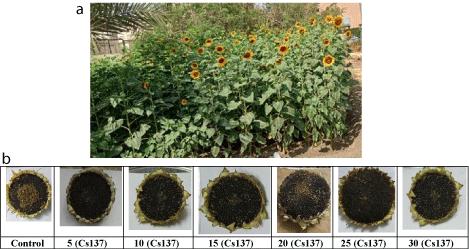
Quality Evaluation of Sunflower Seeds Resulted in Irradiated Seeds Cultivation by Gamma Radiation of Cesium (Cs137)
This study was done to evaluate the occurrence of quality parameters in harvested sunflower (Helianthus annuus L.) seeds which were irradiated with 0, 5, 10, 15, 20, 25, and 30 Gy of gamma radiation in a cesium (Cs137) before cultivation in two seasons. The quality characteristics of sunflower seeds including production quality such as disc weight, disk seeds weight and hundred seeds weight, and parameters of seed quality such as content of oil, protein, total phenol, and carbohydrate were…

Perspective | Open Access
Published on: 23 Jul 2026
Article ID: wjpbs.2026.g2302
Remembering My Mother on Wesak Day: Reflections on Science, Impermanence, and the Meaning of a Life in Research
Wesak Day commemorates the birth, enlightenment, and passing of Gautama Buddha, representing one of the most spiritually significant occasions in the Buddhist calendar. For me, however, Wesak Day has acquired an additional personal meaning since the passing of my mother on 12 June 2025. During the three-day funeral ceremony, the images of the Buddha, Kwan Yin Bodhisattva, and Da Shi Zhi Bodhisattva stood prominently before us, creating an atmosphere of solemnity, compassion, and…

Research Article | Open Access
Published on: 23 Jul 2026
Article ID: wjets.2026.g2303
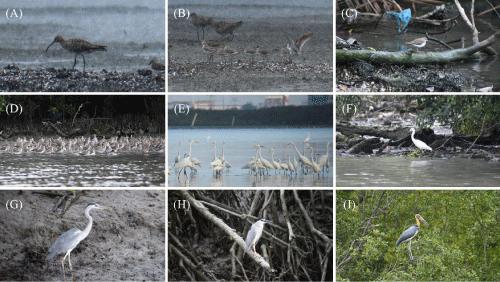
Preliminary Observational Documentation of Shorebirds and Waterbirds along the Coastline of Kuala Juru and Port Klang, Malaysia
Coastal wetlands and estuarine mudflats along the East Asian–Australasian Flyway (EAAF) are critical for migratory waders and resident waterbirds, yet many sites in Southeast Asia remain poorly documented despite intense anthropogenic pressure. This study presents opportunistic photographic observations of waterbirds, migratory waders, and predatory birds in two heavily industrialised estuarine systems along Malaysia’s west coast: Kuala Juru, Penang, and Port Klang, Selangor. Surveys were…

Research Article | Open Access
Published on: 23 Jul 2026
Article ID: wjfm.2026.g2304
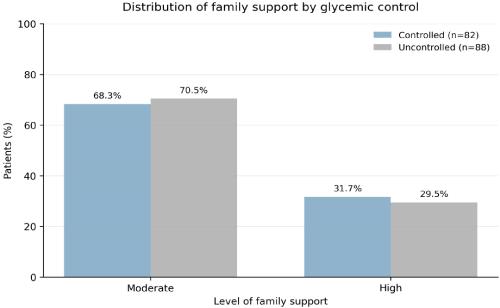
Family Support and Its Association with Glycemic Control in Patients with Type 2 Diabetes Mellitus in the DiabetIMSS Program
Objective: To determine the association between family support and glycemic control in patients with type 2 diabetes mellitus (T2DM) enrolled in the DiabetIMSS program at a Family Medicine Unit (FMU) in Zacatecas, Mexico.
Methods: An observational, cross-sectional, analytical study was conducted. A total of 170 patients with T2DM from FMU No. 4 of the Instituto Mexicano del Seguro Social (IMSS) in Guadalupe, Zacatecas, were included. The…

Research Article | Open Access
Published on: 23 Jul 2026
Article ID: wjid.2026.g2305
Percentage and Concentration of the Antibiotic Polymyxin in Extracts of Four Species Belonging to the Genus Bacillus
The study included the determination of the antibiotic (Polymyxin) and its proportions in the organic extracts of marine species of the genus Bacillus, namely (B. cereus, B. subtilis, B. circulans, B. polymyxa), which were isolated from beach sediment samples from the Afamia region with geographical coordinates (35°76'19.1"N; 35°54'19.3"E) It is an open area affected by tourist activities, sewage canals, and ship waste. To obtain organic extracts of bacterial isolates, the optimal conditions…

Research Article | Open Access
Published on: 23 Jul 2026
Article ID: wjptr.2026.g2306
Innovations in Blood Pressure Monitoring: Physical Therapists' Acceptance of Smartwatch for Patient Self Monitoring
Blood pressure (BP) monitoring is a vital component of cardiovascular health assessment, yet its routine use is often hindered by accessibility issues and reliance on traditional instruments typically used by medical professionals. This study aimed to assess the acceptance of BP-monitoring smartwatches (wearable devices) among licensed Physical Therapists in Laguna, Philippines.
A quantitative descriptive research design was utilized, with data collected through an online survey…

Research Article | Open Access
Published on: 15 Jul 2026
Article ID: wjdod.2026.g1501
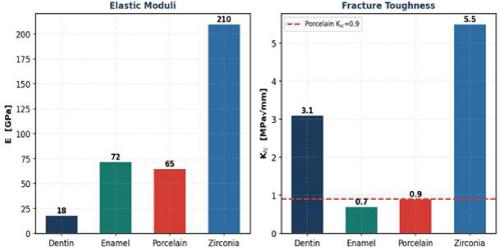
Dental Crown Fracture Failure Risk Based on Strain Energy Density
Purpose: This paper presents an analytical framework for predicting fracture risk in bilayer dental ceramic restorations—specifically porcelain-veneered zirconia (PVZ) crowns—based on the Averaged Strain Energy Density (ASED) criterion and a Fourier-series moisture diffusion model through quantitative non-dimensional analysis.
Scope: This is a theoretical and methods contribution. No original fracture tests are performed. Results are compared…

Research Article | Open Access
Published on: 15 Jul 2026
Article ID: wjgg.2026.g1502
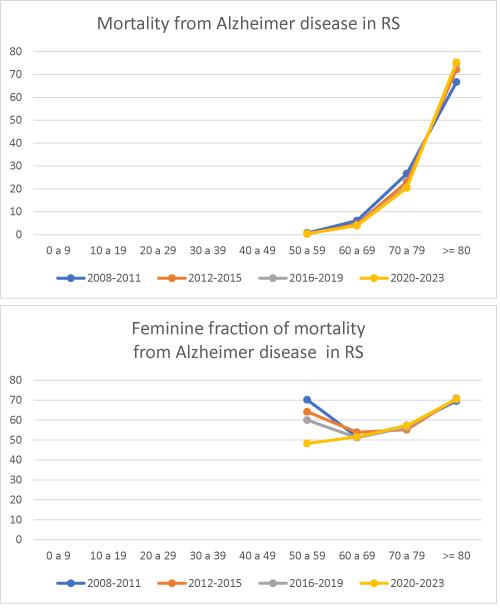
Age-Related Dynamics and Gender Differences Reveal that Senescent Phase of Human Ontogeny can be Subdivided According to Morbidity and Mortality Caused by Various Disorders
The epidemiologic data are presented for morbidity and mortality from cardiometabolic disorders and Alzheimer disease during chronologic period 2008-2023 in three Brazilian states of Southern region. The evidence obtained suggests that senescent phase of human ontogeny can be subdivided due to peculiarities of age-related dynamics and gender differences in morbidity and mortality.
Keywords: Morbidity; Mortality; Ontogeny; Metabolic Syndrome; Dementia